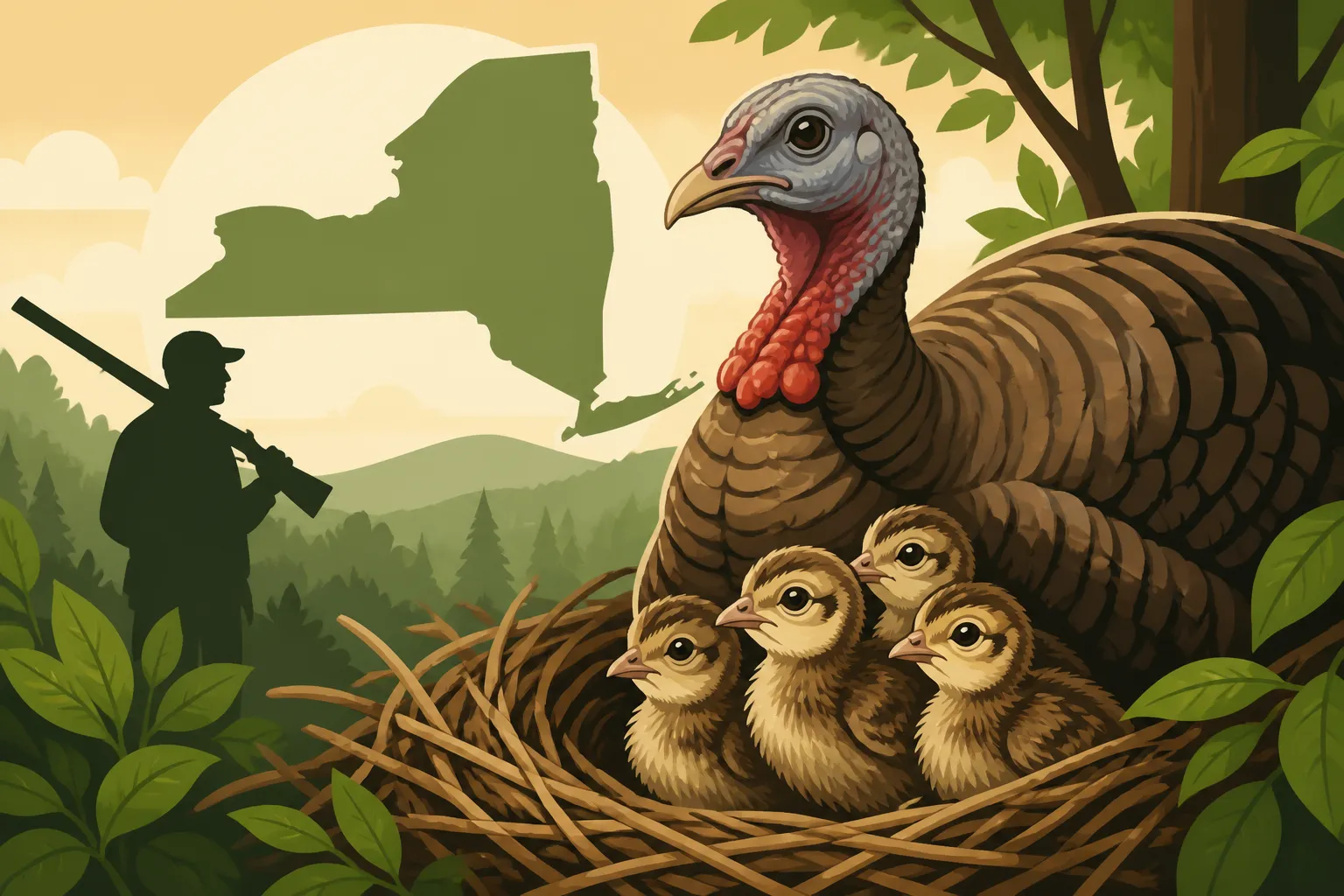
New York Wild Turkey Nesting Success
It's a familiar feeling for many New York turkey hunters: you scout hard, you call your heart out, but sometimes the woods just feel… empty. One of the biggest reasons for these ups and downs in our wild turkey populations, the ebbs and flows we experience from year to year, comes down to something most of us rarely see directly: the success of the spring nesting season. This guide will dive deep into what makes a successful wild turkey hatch in New York and why it's so vital to the health of our state's flocks.
Understanding Turkey Nesting Success: Why It Matters to Hunters
When we talk about "nesting success," we're not just talking about a few eggs hatching. We're talking about the fundamental building blocks of future turkey populations. Every single poult (young turkey) that makes it past its vulnerable first few weeks represents potential future gobblers and hens, ensuring the continued health and huntable numbers of these magnificent birds across New York. If nesting success is poor for a year or two, the effects ripple through the population, impacting hunter opportunities and bird sightings years down the line.
The Foundation of Future Flocks
Think of a successful turkey hatch as the bedrock of the entire turkey hunting experience. Without it, everything else crumbles. A single hen might lay upwards of a dozen eggs, but a host of challenges stand between those eggs and adult birds. When many nests fail, or when poults don't survive their critical early weeks, the number of birds available to breed the following year, and to hunt two years down the road, takes a significant hit. This phenomenon, often referred to as "recruitment," is all about how many young birds successfully join the adult population. Low recruitment translates directly to fewer strutting gobblers and quiet spring woods in the future.
It's why you might have an incredible season one year, with birds seemingly everywhere, only to find the woods eerily quiet a couple of years later. Often, this isn't due to overhunting, but rather a direct reflection of what happened back in May and June during the nesting and brooding period. Understanding these dynamics helps us appreciate the complexity of managing a wild turkey population and why hunters play such a crucial role in supporting conservation efforts.
Reading the Signs: Poult-to-Hen Ratios
One of the most direct ways wildlife biologists and even keen observers assess nesting success is through what’s called the poult-to-hen ratio. Simply put, this ratio tells us how many poults are surviving per hen observed. For instance, if you see a hen with six poults, that's a good sign. If you see many hens with no poults, or only one or two, that suggests a tougher nesting season.
While the New York Department of Environmental Conservation (DEC) conducts formal Poult-to-Hen Ratios and What They Mean through summer brood surveys, hunters and outdoor enthusiasts can informally contribute to this understanding. Just being observant during late summer and early fall, noting the size of family groups and how many poults are accompanying hens, provides valuable anecdotal evidence of local success. A healthy poult-to-hen ratio, generally considered to be around 2-3 poults per hen, indicates a thriving population with good recruitment. If these numbers dip consistently, it's a red flag that factors like weather, predation, or habitat might be causing problems. Hunters are often the first to notice these subtle shifts, long before official surveys are fully analyzed.
The Life Cycle of a Wild Turkey Nest: From Egg to Poult
Understanding wild turkey nesting success in New York requires a look at the actual nesting process itself. It's a truly remarkable cycle, fraught with peril from start to finish, that highlights the resilience of these birds.
Nesting Behavior and Site Selection
The nesting process for a wild turkey hen is a secret affair, driven by instinct and a desperate need for concealment. After breeding in the spring, the hen will slip away from the gobblers to select a nest site. This isn't a hasty decision; she'll often spend days scouting, looking for just the right spot. What makes a "right" spot? Typically, it's an area that offers dense cover, acting as a natural fortress against prying eyes and hungry predators. We're talking about the base of a thick evergreen, a tangled brush pile, a fallen tree providing an overhang, or a dense patch of tall grass or ferns. The goal is complete invisibility from above and on the ground. These sites are often found in early successional habitat, brushy fields, or the dense understory of thinned timber.
Once the site is chosen, she'll meticulously create a shallow depression, usually scraping away leaf litter and debris, and then line it with leaves, dry grass, and sometimes a few of her own breast feathers. Then begins the painstaking process of laying eggs, usually one per day, until her clutch is complete. A typical clutch size in New York can range from 8 to 15 eggs, though 10-12 is common. During this egg-laying phase, the hen will leave the nest for short periods each day to feed, minimizing her scent and presence around the nest.
Incubation and Hatching Challenges
Once the full clutch is laid, the hen begins the arduous incubation period, which lasts approximately 28 days. This is perhaps the most vulnerable time for the hen and her unborn poults. She will sit almost continuously on the nest, only leaving for brief periods (often just once a day) to feed, drink, and stretch. Her survival, and the survival of her future offspring, depends entirely on her camouflage, her stillness, and the secrecy of her nest site. She is a picture of patience, blending seamlessly into her surroundings, relying on her dull feathering to disappear into the undergrowth.
During these four weeks, the eggs are susceptible to temperature fluctuations, predation, and even disturbance from human activity. If the nest is discovered, she may abandon it, or a predator may claim the eggs. If the nest survives, all the poults typically hatch within a 24-hour period, a remarkable feat of biological synchronization. The newly hatched poults are precocial, meaning they are covered in down and can walk and feed themselves almost immediately. However, they are incredibly fragile and entirely dependent on the hen for warmth and protection, particularly in those critical first few weeks. Their small size makes them easy targets for a variety of predators and vulnerable to the elements.
Key Environmental Factors Influencing Nesting Success in New York
While a hen's instinct is paramount, external environmental factors play a massive role in whether those eggs turn into thriving poults. New York's diverse climate and landscape present unique challenges and opportunities for nesting turkeys.
The Impact of Weather Patterns
Weather is arguably one of the most critical, yet uncontrollable, variables affecting wild turkey nesting success. A perfect spring for humans—warm and sunny—isn't always perfect for turkeys.
- Cold, Wet Springs: In New York, especially in regions like the Southern Tier or parts of the Catskills, cold, wet springs can be devastating. Prolonged periods of cold, drenching rain in May and early June, when most poults are hatching and in their most fragile stage, can lead to widespread poult mortality. Young poults, only days or a few weeks old, struggle to regulate their body temperature. They can quickly succumb to hypothermia, especially if they get wet and the temperatures drop. Additionally, wet conditions can increase the prevalence of diseases and reduce the availability of the vital insect prey that poults rely on for protein. Imagine a small, downy bird, soaked to the bone, trying to find warmth and food in a cold, soggy landscape – it's an uphill battle. This is why a harsh spring often leads to fewer birds seen in the fall.
- Drought Conditions: While less common than excessively wet springs, periods of severe drought can also negatively impact nesting success, albeit often indirectly. Drought conditions can lead to stunted growth of herbaceous cover, reducing the dense hiding spots essential for both nesting hens and young poults. Furthermore, a lack of moisture can decrease insect populations, diminishing the critical protein source that poults need to grow rapidly and survive. The balance is delicate, and either extreme can pose a serious threat to a healthy turkey hatch.
Food Availability and Nutritional Needs
Food is the fuel for life, and for wild turkeys, especially during the nesting and brooding periods, its availability is non-negotiable for success.
- Insects for Poults: For the first several weeks of their lives, wild turkey poults are almost entirely insectivorous. They require a high-protein diet to fuel their incredibly rapid growth. Think of them as tiny, feathered eating machines, constantly foraging for spiders, grasshoppers, caterpillars, and other invertebrates. Areas with abundant insect populations, often found in rich, diverse, early successional habitats, are crucial brooding grounds. If insect populations are low due to poor weather or habitat degradation, poults simply won't get the nutrition they need, leading to slower growth, weakened immune systems, and higher mortality rates. This is why the hens often lead their broods to fields or forest edges with lush vegetation soon after hatching.
- Hen's Condition: The hen's physical condition going into the nesting season is also a major determinant of success. A hen that has endured a tough winter or one that lacks access to nutritious food sources in the early spring may not be in optimal shape to lay a full clutch of viable eggs. Her energy reserves are critical not only for egg production but also for the weeks of incubation where she expends immense energy and often loses significant body weight. A well-nourished hen is more likely to lay healthy eggs, sustain incubation, and provide better care for her poults once they hatch. This connection underscores the importance of year-round habitat quality, not just during the spring.
Predation: The Persistent Threat to Turkey Nests and Poults
Even with perfect weather and abundant food, wild turkey nests and young poults face a gauntlet of predators in New York's diverse landscapes. Predation is a constant, natural pressure, and it's a primary reason why a hen might lay a dozen eggs, but only a fraction of those might make it to adulthood.
Common Nest Predators in New York
New York is home to a robust array of predators, many of whom have a keen sense of smell or sight for finding turkey nests and targeting vulnerable poults. The list of culprits is long and varied:
- Mammalian Predators: Raccoons are notorious nest raiders, adept at locating nests by scent and consuming eggs. Skunks and opossums also contribute significantly to nest failure, methodically cleaning out clutches. Foxes, both red and gray, are opportunistic predators that will target nests and small poults. Even common animals like feral cats and dogs can be incredibly destructive to ground-nesting birds. And, of course, the ever-present coyote population across New York also poses a significant threat, preying on both eggs and young turkeys. We've talked about Coyotes Across New York State before, and their adaptable nature makes them a consistent pressure on game species like turkeys.
- Avian and Reptilian Predators: While less frequently discussed than mammals, certain avian predators can also take a toll, especially on newly hatched poults. Hawks and owls, particularly great horned owls, are formidable hunters capable of snatching young turkeys. Snakes, especially larger species, will also raid nests and consume eggs. Each predator has its own method, but the result is the same: fewer turkeys.
Strategies for Predator Avoidance and Management
Wild turkeys have evolved numerous strategies to cope with this constant predatory pressure. The hen's primary defense is stealth and camouflage. Her cryptic coloration allows her to blend seamlessly into the leaf litter and undergrowth. She sits incredibly still, relying on not being seen or smelled. Nest site selection, as we discussed, is paramount, with hens choosing locations that offer maximum concealment from multiple angles.
From a management perspective, direct predator control for turkeys is generally not a widespread practice, mainly because it's often impractical and quickly negated by natural population turnover. Instead, habitat management is the most effective tool to mitigate predation impacts. By creating and maintaining dense, diverse nesting and brooding cover, we provide hens with more options for secretive nest sites, dispersing nests and making it harder for predators to find them. Think of it like giving the turkeys more places to hide their valuables – the more hiding spots, the harder it is for a thief to find them all. This habitat work supports not just turkey populations, but a host of other wildlife as well.
Habitat Management for Thriving Turkey Populations
If weather is the uncontrollable variable and predation is the constant threat, then habitat is the controllable solution. Thoughtful land management can significantly boost New York's wild turkey nesting success, providing the crucial cover and food sources these birds need to thrive.
Ideal Nesting Habitat Components
When a hen chooses a nest site, she's looking for a very specific set of features: security, concealment, and proximity to good brooding areas. The ideal nesting habitat in New York usually includes a mosaic of early successional cover.
- Dense Undergrowth: This means thickets of shrubs like hawthorn, dogwood, or multiflora rose, dense patches of brambles, or areas with thick saplings. These provide excellent horizontal and vertical cover, making it difficult for ground predators to navigate and visually obscuring the nest.
- Tall Grasses and Forbs: Old fields, forest clearings, or powerline rights-of-way that haven't been mowed for a year or two can develop into dense stands of tall grasses and broad-leafed plants. These offer incredible camouflage, allowing a hen to disappear into the vegetation.
- Natural Debris: Brush piles, fallen logs, and logging slash left after timber harvests provide instant, dense overhead cover and structure that hens readily use for nesting. These natural hideouts are invaluable.
- Diversity is Key: The best turkey habitats aren't uniform. They feature a patchwork of mature timber, brushy edges, and open clearings. This diversity allows hens to find safe nesting sites that are still close to the varied food sources and brooding cover needed once the poults hatch. You can often see the signs of such diversity when Scouting New York Public Land Before Season, noting where open areas meet denser woods.
Conversely, overly manicured landscapes or vast, open areas without dense undergrowth make it incredibly difficult for hens to hide their nests. A healthy forest needs some messiness, some "edge," to truly support robust turkey populations.
The Importance of Brooding Habitat
Once poults hatch, their habitat needs shift slightly but remain critical. They still need cover, but now they also need easy access to insects and warmth. This is where "brooding habitat" comes in.
Brooding habitat is typically characterized by dense, herbaceous growth that is relatively open at ground level. Think of areas with clover, native grasses, or light weeds that allow small poults to run around freely and forage for insects, while still providing overhead protection from keen-eyed raptors. The ideal brooding area will have a strong insect population – the poults' primary food source – and be able to dry quickly after rain, crucial for preventing hypothermia in young birds.
Land management practices play a huge role here. Small clearings, managed food plots (for bugging areas, not grain), selective timber harvests that open up the canopy and encourage undergrowth, and controlled burns can all create and enhance brooding habitat. Places like New York State Forest Hunting lands often have management plans that indirectly benefit turkeys by promoting diverse forest stages. Many astute hunters utilize tools like GoHunt to scout and understand habitat compositions before the season, identifying areas that might offer ideal nesting or brooding cover based on satellite imagery and topographical maps, giving them an edge in finding productive areas.
Monitoring, Research, and Hunter Involvement
The health of New York's wild turkey population isn't left to chance. A combination of scientific monitoring, ongoing research, and active hunter participation helps ensure these birds continue to thrive across the state.
DEC Surveys and Population Tracking
The New York Department of Environmental Conservation (DEC) employs a variety of methods to keep tabs on wild turkey populations, including directly monitoring nesting success indicators. They conduct annual surveys to estimate the overall New York Turkey Population Estimate and track New York Turkey Population Trends over time.
- Spring Gobbler Hunter Survey: This survey collects data on hunter effort, harvest success, and observations of turkeys, providing a snapshot of the adult gobbler population.
- Summer Brood Survey: Perhaps most directly relevant to nesting success, the DEC's summer brood survey asks cooperators (including hunters and rural landowners) to report observations of hens and their poults. This critical data helps calculate the crucial poult-to-hen ratios that we discussed earlier, offering direct insights into how successful the previous spring's hatch was. Low ratios often foreshadow changes in New York Spring Turkey Harvest Numbers in subsequent years.
- Harvest Reporting: Mandatory reporting of all harvested turkeys provides direct data on hunter success and the age/sex structure of the harvested population, which indirectly reflects reproductive success.
All of this data is compiled and analyzed to inform management decisions, including season lengths, bag limits, and habitat initiatives, all aimed at sustaining healthy turkey populations for current and future generations of New York hunters.
The Hunter's Role in Conservation and Data Collection
Hunters are, without a doubt, the most important allies in wild turkey conservation. We are often the eyes and ears on the ground, witnessing the day-to-day realities of the turkey population. Our involvement goes beyond just enjoying the resource; it's about actively contributing to its future.
- Participate in Surveys: If you spend time in the woods in summer, consider participating in the DEC's summer brood survey. It's a simple way to contribute valuable data that helps biologists understand reproductive success. Even informal observations of groups of hens with or without poults, or varying poult sizes, can be incredibly insightful locally.
- Ethical Hunting Practices: Following regulations, respecting bag limits, and making ethical shot choices are fundamental. Supporting organizations that invest in habitat restoration and research also makes a tangible difference.
- Habitat Stewardship: Many hunters are also landowners or actively involved in habitat improvement on public lands. Planting native grasses, creating brush piles, or promoting early successional growth directly benefits nesting turkeys.
- Stay Informed: Beyond direct participation, staying informed about turkey biology and management helps you be a more effective advocate for the species. Platforms such as GoHunt can offer insights into regional harvest data and population statistics, providing a deeper understanding of the factors influencing turkey numbers in specific Wildlife Management Units. This knowledge can enhance your appreciation for the birds and your hunting strategy, whether you're planning for Spring Turkey Hunting in New York or Hunting New York's Fall Turkey Season.
By understanding the delicate balance required for successful nesting and actively supporting conservation efforts, we can all help ensure that the thrilling gobble of a wild turkey continues to echo through New York's woods for many springs to come.
Factors Influencing Wild Turkey Nesting Success
| Factor | Positive Impact | Negative Impact |
|---|---|---|
| Weather (Spring) | Warm, dry hatching period | Cold, prolonged wet periods; severe drought |
| Habitat Quality | Dense nesting cover; abundant brooding cover | Open, manicured landscapes; lack of diverse cover |
| Food Availability | Abundant insects for poults; healthy mast crops | Scarcity of insects; poor mast year |
| Predation | Effective nest concealment; low predator density | High predator populations; easily accessible nests |
| Hen Health | Good body condition prior to nesting | Poor health due to harsh winter or low nutrition |
| Human Disturbance | Minimal disturbance in nesting areas | Frequent foot traffic; habitat destruction |
Disclaimer
This article is for general informational purposes only and does not constitute professional advice. Laws, prices and regulations vary by location and change over time. Consult a qualified professional for guidance on your specific situation.