How Severe Winters Hit Adirondack Deer
As a hunter who’s spent countless seasons chasing whitetails in the rugged Adirondack mountains, I can tell you firsthand that a truly brutal winter can redefine what "tough" means for our deer herd. We often focus on hunting tactics, but the truth is, winter is the ultimate deer manager up north, and understanding its impact is crucial for anyone who cares about the health of the herd and their future hunting success. This guide will dive deep into how those severe, unrelenting New York winters shape the lives of Adirondack deer, from their immediate survival struggles to the long-term ripple effects on the population and hunting opportunities.
The Harsh Reality of Adirondack Winters for Deer
When those first snowflakes start to fall in the Adirondacks, it’s a beautiful sight, no doubt. But for a deer, it’s the beginning of a relentless test of endurance. These aren't your typical Southern Zone winters where deer might see a few inches of snow here and there; we're talking about months of deep, persistent snowpack and bone-chilling cold that fundamentally alters their world.
Snow Depth and Duration: The Silent Killers
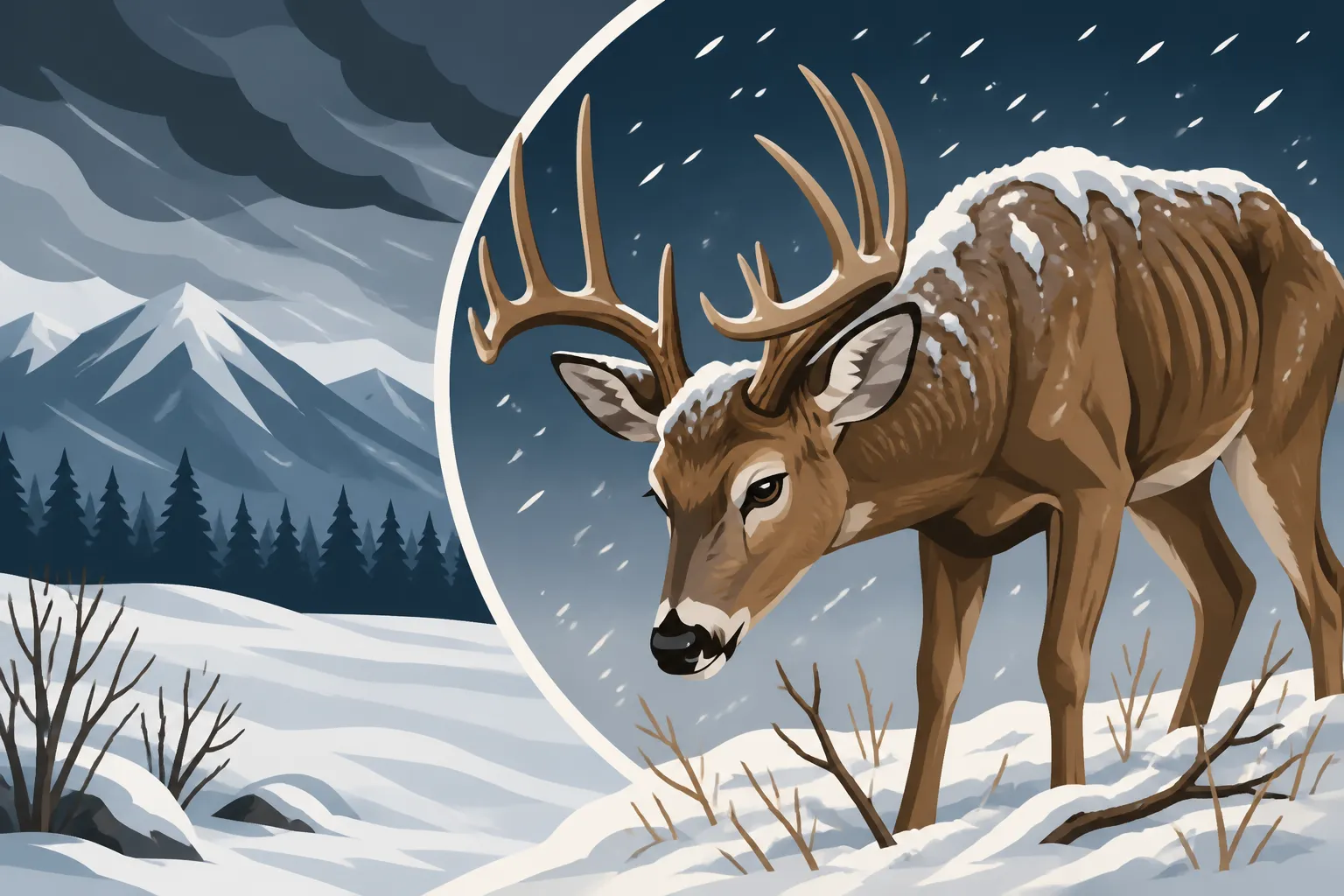
The single biggest factor in winter deer survival in the Adirondacks isn’t just how cold it gets, but how much snow falls and how long it sticks around. When snow depth regularly exceeds 18-20 inches, it becomes incredibly difficult for deer to move around. Imagine trying to run through waist-deep snow all day, every day. It’s exhausting. This isn’t just about making them tired; it’s about calorie expenditure. Every step they take costs precious energy, energy they desperately need to stay warm and simply survive. A foot and a half of snow is enough to drastically limit their ability to find food, forcing them to burn through their fat reserves at an alarming rate.
Then there's the duration. A brief cold snap or heavy snowfall is manageable. But when the snow piles up in November and doesn't begin to recede until April, that's five to six months of constant struggle. The cumulative effect of sustained deep snow is what truly decimates a herd. Fawns, born the previous spring, are often hit the hardest. They haven't had a full year to build up the fat reserves of an adult, and their shorter legs mean they expend even more energy trying to navigate the deep drifts. This prolonged struggle contributes directly to increased mortality rates, often without a single hunter ever being involved.
Thermal Stress and Energy Depletion
Beyond the physical exertion of moving through snow, the sheer cold itself is a constant drain on a deer’s system. Deer are incredibly well-adapted, growing a thick, insulating winter coat that traps air to keep them warm. But even with this natural insulation, sustained sub-zero temperatures force their bodies to work overtime to maintain core temperature. They shiver, they huddle, they seek shelter, all of which burn calories.
Their primary defense against thermal stress is their stored fat. Think of it like a bank account: they spend all fall depositing as much as they can, gorging on acorns, apples, and agricultural crops (where available). In the Adirondacks, acorns can be less abundant than further south, putting even more pressure on alternative food sources. Once winter hits, they start making withdrawals. A mild winter means smaller withdrawals, leaving them with enough reserves to bounce back quickly in the spring. A severe winter, however, means massive, continuous withdrawals. If the cold is relentless and food is scarce, that bank account can hit zero long before spring arrives. When their fat reserves are gone, they begin to metabolize muscle tissue, leading to emaciation and, eventually, death.
Limited Food Sources and Browse Availability
The deep snow isn't just a physical barrier; it's a blanket over their buffet. Deer are primarily browsers, meaning they eat twigs, buds, and small shrubs. In an average winter, they can still access these, digging through shallow snow or reaching higher branches. But when the snow packs down to several feet, all but the tallest browse is completely inaccessible. This forces them to rely on whatever they can find, often scraping bark from trees or eating evergreen needles, which offer little nutritional value and are harder to digest.
This limited access to food exacerbates the energy depletion caused by cold and snow. It's a cruel feedback loop: they need more energy to cope with the environment, but the environment makes it harder to get that energy. Areas known as "deer wintering areas" or "deer yards" become critical. These are typically dense conifer stands, like hemlock or spruce, where the canopy intercepts much of the snow, creating shallower snow depths on the ground. These areas also offer some thermal cover from wind and extreme cold. However, even in deer yards, browse can become severely overbrowsed if too many deer are concentrated there for too long. If you're scouting, understanding where these vital areas are is paramount. Finding Sign in Big Adirondack Timber often involves locating these critical winter habitats.
Impact on Deer Behavior and Survival Strategies
Deer aren't simply passive victims of winter; they employ a range of survival strategies to cope with the harsh conditions. However, a severe winter can push these strategies to their breaking point, leading to significant changes in their behavior and ultimately, their numbers.
"Yard Up": Concentrating for Survival
One of the most remarkable adaptations of northern deer is their tendency to "yard up" when snow depths become severe. As winter progresses, deer from a wide area will migrate, sometimes many miles, to these aforementioned deer wintering areas. They essentially consolidate their numbers into relatively small, sheltered patches of evergreen forest. Here, the dense canopy reduces snow depth and offers protection from wind. By concentrating, they also create a network of trails, or "deer runs," that they can use repeatedly, saving energy that would otherwise be spent plowing through fresh snow.
While yarding up is a brilliant survival mechanism, it comes with significant drawbacks. The intense concentration of deer in a small area puts immense pressure on available browse. Food quickly becomes scarce, leading to competition and rapid overbrowsing. Furthermore, this concentration makes them far more vulnerable to predation. Predators, like coyotes and bobcats, learn where these yards are and can patrol the perimeter, picking off weakened or unwary deer. Hunters who understand this phenomenon can sometimes locate these yards and find deer sign for the following season, though disturbing them during winter is highly discouraged. If you've ever scouted a deep funnel, you might be seeing remnants of a past deer yarding pattern, much like you'd look for in Hunting a Funnel Between Two Swamps.
Increased Predation Risk
For predators, a severe winter can be both a challenge and an opportunity. While they too struggle with deep snow, the weakened and concentrated deer in wintering areas become much easier prey. Coyotes, in particular, are opportunistic and will key in on deer yards. A healthy deer can often outrun a coyote, especially in lighter snow. But an emaciated deer, struggling through deep drifts, is no match for a persistent predator, particularly if they are working in a pack.
Black bears, though typically denning, can also play a role in late-winter mortality if they emerge early due to hunger or disturbance. Even domestic dogs can become a significant threat to yarded deer, chasing them and causing them to expend critical energy, sometimes leading to death by exhaustion or injury. This increased predation on already stressed animals further contributes to the overall winter kill, showcasing the intricate balance of the ecosystem. Understanding this dynamic can even influence your approach to something like Coyote Calling in a New York Winter, as a healthy deer herd means healthier coyote populations, too.
Delayed Fawn Recruitment and Reproductive Success
The impacts of a severe winter don't just stop with the deer that die during the cold months. The does that manage to survive are often in extremely poor body condition. This has a direct and devastating effect on the following spring's fawn crop, a concept often referred to as "fawn recruitment." A doe that has depleted all her fat reserves and lost significant muscle mass is less likely to conceive, or if she does, she might be carrying fewer fawns. Instead of twins or triplets, she might only carry a single fawn, or sometimes none at all.
Furthermore, even if she successfully gives birth, her milk production will be severely limited due to her own malnutrition. This means fawns are born smaller, weaker, and with less access to the rich, nutritious milk they need for rapid early growth and survival. The result is a lower survival rate for fawns in the weeks and months after birth, even if the spring and summer weather is favorable. It can take several years for a deer population to recover from the combined effects of direct winter mortality and reduced fawn recruitment. This highlights the delicate balance and the significant New York Predator Impact on Fawn Recruitment, as these vulnerable young deer are easy targets for predators.
Long-Term Consequences for the Adirondack Deer Population
The effects of a severe Adirondack winter aren't just seen immediately; they ripple through the deer population for years, influencing everything from overall numbers to antler quality and future hunting seasons.
Population Fluctuations and Recovery Timelines
Deer populations in the Adirondacks, unlike some other parts of New York, often experience significant fluctuations due to winter severity. It's a boom-and-bust cycle. A string of mild winters might lead to a burgeoning deer population, with more deer spreading out into less optimal habitats. Then, a single severe winter can act as a brutal reset button, culling a large portion of the herd, particularly the young and the old. The scale of this winter kill can be truly staggering, and it's not uncommon for hunters to report dramatically fewer deer sightings in the years following a particularly harsh winter.
The recovery from such events is slow. Given the reduced fawn recruitment and the slower reproductive rate of northern deer compared to their Southern Zone counterparts, it can take anywhere from three to seven years for a population to rebuild to pre-winter levels, assuming subsequent winters are mild. This is a stark contrast to areas with more agricultural influence where deer can rebound much faster. Hunters often see these trends reflected in official data and studies like those contributing to the New York Deer Population Estimate.
Influence on Hunting Seasons and Management Decisions
The New York State Department of Environmental Conservation (DEC) closely monitors winter severity, especially in the Northern Zone, because of its profound impact on the deer herd. They use various metrics, including snow depth, duration, and something called the Winter Severity Index (WSI), which factors in both snow depth and extreme cold. These data points directly inform their management decisions. For instance, after a severe winter, the DEC might adjust the number of Deer Management Permits (DMPs) or antlerless tags issued in specific Wildlife Management Units (WMUs). The goal is to allow the herd to recover, recognizing that nature has already done a significant amount of "management."
While specific changes are always announced annually, understanding the underlying reason for fewer available tags or antlerless opportunities often comes back to the impact of the previous winter. It's a balancing act: ensuring adequate hunting opportunities while also protecting the long-term health and viability of the herd. This is part of the broader work of How the DEC Counts New York Deer and uses that data to inform their regulations.
Hunter Patience and Adaptive Strategies
For the dedicated Adirondack deer hunter, a severe winter means adjusting expectations and tactics. You might simply see fewer deer. Body sizes might be smaller, and antler growth could be noticeably diminished in the years following, as deer divert energy from antler development to basic survival and recovery. This isn't a sign of poor hunting, but rather a reflection of the challenges the herd has faced.
Patience becomes paramount. Instead of expecting high numbers, focus on quality sign and understanding the subtle movements of the surviving deer. They will be more concentrated in those critical wintering areas, making those locations prime spots to scout once the snow melts. After a particularly rough winter, it’s a good time to double down on scouting, using tools like the Scouting With the New York HuntFishNY App to identify potential deer yards and escape routes.
| Factor | Mild Winter Impact on Deer | Severe Winter Impact on Deer |
|---|---|---|
| Snow Depth | Minimal, easy movement | Deep, restricted movement |
| Duration | Short, intermittent | Long, persistent |
| Energy Use | Low, fat reserves maintained | High, rapid fat depletion |
| Food Access | Readily available browse | Very limited, covered browse |
| Mortality Rate | Low, good survival | High, significant winter kill |
| Fawn Recruitment | Good, healthy fawns | Poor, fewer, weaker fawns |
| Predation Risk | Moderate, deer can escape | High, deer are vulnerable |
| Population Trend | Stable to increasing | Significant decline |
| Antler Growth | Good, larger antlers | Reduced, smaller antlers |
What Hunters Can Do and What to Watch For
Understanding the effects of severe winters isn't just academic; it informs how we approach our hunting and our relationship with the resource. As responsible New York hunters, we can play a role in observing the herd and adapting our strategies.
Recognizing Signs of Winter Stress
When you're out in the woods in the spring or even early fall, especially after a tough winter, pay close attention to the deer you see. Are they looking thin, with ribs or hip bones showing? Do they seem lethargic or move with less vigor? These are all indicators that they struggled through the previous winter. Even antler growth can tell a story: if bucks that should be prime are only sporting spikes or small racks, it could be a sign of significant winter stress. The body condition of the does you observe is particularly important, as it directly relates to the health of the upcoming fawn crop.
Sometimes, after an exceptionally brutal winter, you might even encounter deer carcasses in the woods. While it's certainly a somber discovery, it's a stark reminder of nature's harsh realities and the immense pressure these animals face. These observations help paint a picture of the herd's overall health and the challenges it's overcoming. This kind of field observation is key to being a truly informed hunter, much like Shed Hunting on New York Public Land can reveal insights into buck health and behavior.
Scouting for Wintering Areas
Armed with knowledge about winter's impact, you can become a more effective scout and hunter. In the late winter and early spring, once snow starts to recede but before leaves fully bud, take the time to identify traditional deer wintering areas. Look for dense stands of conifers (hemlock, spruce, balsam fir) on north-facing slopes or in sheltered valleys. You'll often find concentrated deer sign – heavily browsed twigs, numerous tracks, and sometimes even shed antlers (though shed hunting in active deer yards can cause unnecessary stress to the deer, so proceed with caution and respect).
These areas, while vital for winter survival, can also be key areas of deer activity during the hunting season, particularly during colder snaps or early snowfall. Deer are creatures of habit, and these thermal and cover sanctuaries will always draw them in. Using mapping tools like GoHunt can help you identify these evergreen blocks and plan your scouting trips. While not a direct substitute for boots on the ground, GoHunt's satellite imagery can highlight areas of dense cover that might serve as deer yards. Knowing these spots can be invaluable when planning your hunting strategy, especially when considering Where Adirondack Bucks Bed at different times of the year.
Ethical Considerations and Management Awareness
Ultimately, understanding how severe winters hit Adirondack deer fosters a deeper appreciation for these resilient animals and the delicate balance of their ecosystem. It reminds us that hunting is just one factor in deer population dynamics; natural forces like winter and predation play an equally, if not more, significant role. This perspective encourages ethical hunting practices, such as being selective in harvesting does after a severe winter, or giving the herd a season or two to rebound if you see widespread signs of winter stress.
Supporting science-based wildlife management decisions by the DEC is also crucial. Their regulations, including DMP allocations and season structures, are designed to ensure the long-term health and sustainability of the New York deer herd, often directly in response to these environmental pressures. By observing, adapting, and respecting the challenges our Adirondack deer face, we can all contribute to a healthier, more vibrant hunting future.
Disclaimer
This article is for general informational purposes only and does not constitute professional advice. Laws, prices and regulations vary by location and change over time. Consult a qualified professional for guidance on your specific situation.