Tracking a Deer in Fresh New York Snow
There’s almost nothing more disheartening in the deer woods than making what you thought was a good shot, only to watch that whitetail bound off into a fresh blanket of New York snow. The stark white background promises easy tracking, but quickly, the swirling flakes or the deer’s determined run can turn that pristine canvas into a confusing mess. Losing a deer is every hunter’s nightmare, but with a methodical approach and the right techniques, tracking a deer in fresh snow can actually become one of your most effective recovery methods. This guide will walk you through the nuances of snow tracking, from reading subtle signs to employing essential recovery strategies, ensuring you do everything you can to bring your hard-earned venison home.
Understanding the Challenges of Tracking in Fresh Snow
Tracking a deer in snow might seem straightforward, but it presents a unique set of challenges and advantages. The key is to understand how snow conditions affect the trail and how deer react to this winter wonderland.
Why Fresh Snow is Both a Blessing and a Curse
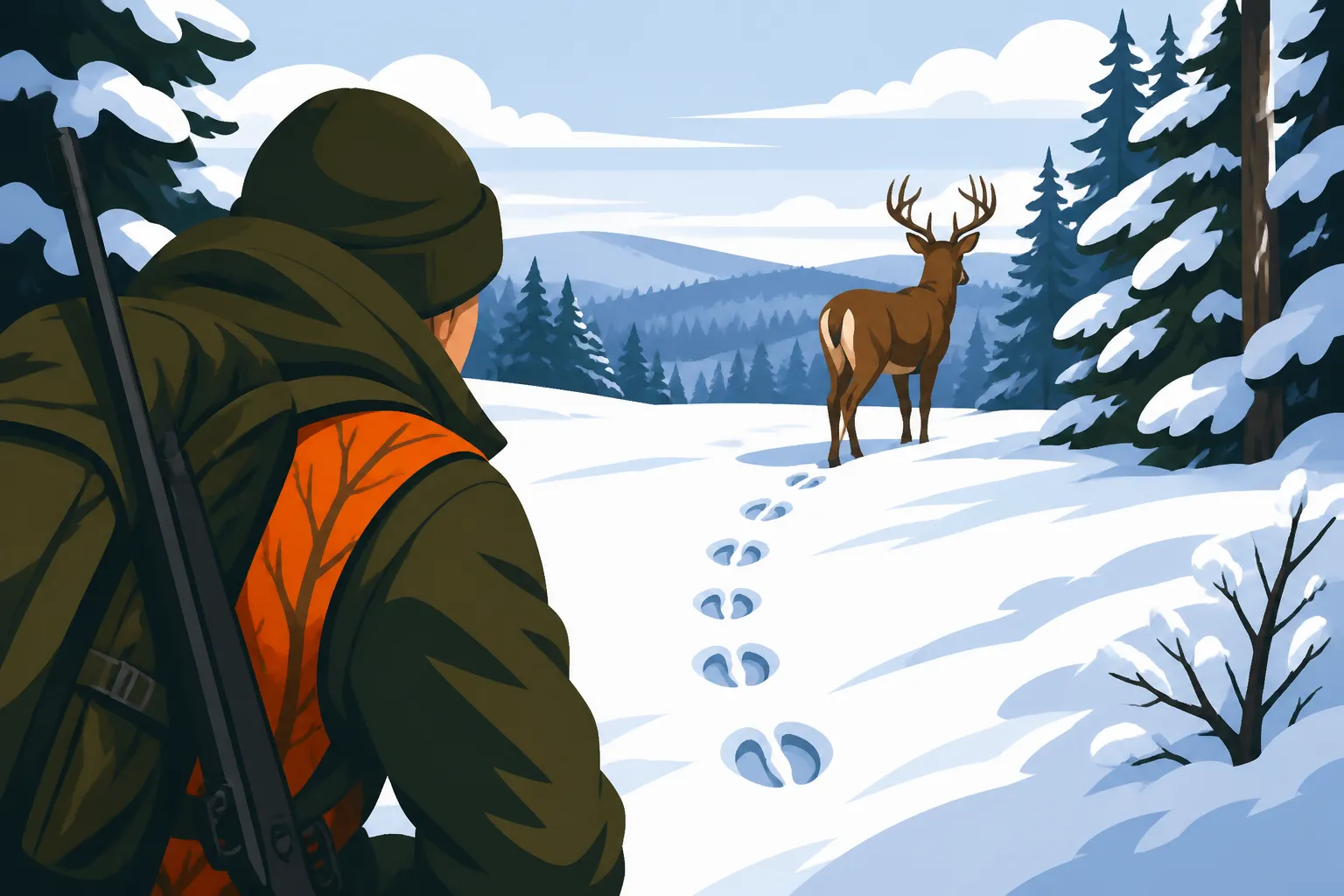
Fresh snow can feel like a gift from the hunting gods. Imagine, a pristine, undisturbed layer covering the forest floor, ready to clearly display every step of a whitetail. This can be incredibly helpful when you're trying to locate a deer after a shot, as every hoof print, every splash of blood, and every disturbed twig stands out in stark contrast. It allows you to visualize the deer's path with a clarity you rarely get on bare ground, helping you determine direction and even pace.
However, fresh snow can also be a formidable adversary. A light, continuous snowfall after your shot can quickly obscure tracks, turning clear imprints into soft, ambiguous depressions. The initial moments after the shot are critical; if a light snow starts, the first 100 yards can be the hardest to decipher, as the tracks may not be fully defined yet, and the falling flakes begin to fill them in almost immediately. Furthermore, deer wounded in fresh snow sometimes travel surprisingly far, driven by adrenaline and the desire to find thick cover, leaving an extensive trail that can test even the most patient tracker. The promise of an easy trail can quickly turn into a frustrating maze if you're not prepared for these shifting conditions.
Reading Different Snow Conditions
Not all snow is created equal when it comes to tracking. The type of snow underfoot dramatically impacts how tracks appear and how long they persist, which is crucial for a successful recovery in places like the Adirondacks or the Catskills.
Imagine tracking through a layer of light, fluffy powder snow. Here, a deer's hooves will sink deeply, leaving very distinct, almost three-dimensional prints. These tracks are usually easy to follow initially, as the soft snow holds the impression well. However, powder snow can also fill in quickly with wind or continued light precipitation, making the trail fade over time. It can also be very quiet to track in, allowing you to move stealthily, but also meaning the deer won't be as alerted by your approach.
Now picture a day with wet, heavy snow. This type of snow creates a much harder, more defined track edge, almost like a cookie cutter. These tracks tend to hold their shape for a much longer period, even with additional precipitation, because the moisture compacts the snow. The downside? Wet snow can be incredibly noisy to walk through. Every step often results in a loud crunch or squeak, which can alert a bedded deer from a considerable distance. This requires an even slower, more deliberate approach.
Finally, consider crusty snow, which often forms after a warm spell or sun exposure followed by a hard freeze. This can be the most challenging to track in because deer often avoid breaking through it if possible. The sharp, loud crrr-unch with every step for both you and the deer makes for a very noisy affair. Deer will often try to find patches of softer snow or bare ground to avoid the noise and effort of breaking through a crust, which can lead to gaps in an otherwise clear trail. Understanding these differences is paramount to staying on track and anticipating where a deer might choose to travel.
Essential Tracking Techniques in New York Snow
Once you’ve got a handle on the various snow conditions, it’s time to put on your deer detective hat. Successful tracking in New York's snowy woods isn't about speed; it's about meticulous attention to detail and a methodical approach.
The Grid Search and "One Step at a Time" Mentality
When you've shot a deer and it's headed into the snow, the absolute worst thing you can do is rush. Panic and haste are the fastest ways to lose a blood trail or tracks. Instead, embrace the "one step at a time" mentality. The very first step after the shot should be to mark the precise location where the deer was standing or where you last saw it. Use a piece of flagging tape, your orange hat, or even drop an arrow. This reference point is invaluable.
From there, approach slowly and deliberately. If you find blood or a clear track, mark it again. Then, take another step, confirming the next sign before moving on. This slow, methodical approach is key, especially if the blood trail is sparse or the tracks are ambiguous. If you lose the trail, this is where a grid search comes into play. Go back to the last confirmed sign and mark it. Then, slowly fan out in a widening circle, or use a linear grid pattern, looking for the next piece of evidence. If you have hunting partners with you, this is the perfect time for a coordinated effort. One person stays on the last confirmed track, while others slowly search ahead and to the sides, looking for fresh sign. This allows you to cover more ground efficiently without getting everyone lost or contaminating the original trail. Remember, the goal isn't to walk quickly; it's to ensure every foot of ground is examined thoroughly before moving forward.
Interpreting Deer Sign Beyond Hoof Prints
While hoof prints are the most obvious sign in the snow, a truly skilled tracker in New York knows to look for a whole host of other clues. The snow acts like a fresh page, recording every interaction the deer has with its environment.
Of course, blood is king. Its quantity, color, and consistency can tell you a lot about where the deer was hit. Bright red, frothy blood often indicates a lung hit, meaning the deer is likely down quickly. Dark, thick blood might suggest a liver or muscle hit, which means a longer tracking job and potentially a longer wait before continuing. Spots of blood on both sides of the track might indicate an exit wound. Even faint specks are important; don't dismiss them. If you're Blood Trailing After Dark in New York, a powerful headlamp can make these faint specs pop under artificial light, especially against fresh snow.
| Blood Type | Color/Consistency | Interpretation | Typical Recovery Time |
|---|---|---|---|
| Lung | Bright red, bubbly, frothy | Arterial, vital organs hit | Short (minutes to an hour) |
| Heart | Bright red, profuse, gushing | Major artery, vital organ hit | Very short (seconds to minutes) |
| Liver | Dark red, thick, clotty | Organ hit, but not necessarily fatal quickly | Longer (2-6 hours, potentially overnight) |
| Muscle | Red, watery, sparse, pinkish | Non-vital tissue hit | Very long, difficult, potentially no recovery |
| Stomach/Paunch | Greenish/brownish, foul odor, digested food | Gut shot, critical wait time | Long (6-12+ hours, often overnight) |
| Bone | Bone fragments mixed with blood | Hit bone, deer may be crippled | Varies, can be immediate or very long |
Beyond blood, look for disturbed snow. A deer that is wounded will often kick up more snow as it runs, creating a wider, more erratic path than an unwounded deer. Look for signs of "plowing" through the snow, where its chest or belly might have dragged, especially if it's hit low. Broken twigs, scraped tree trunks, or even fresh rubs or scrapes near the trail can also indicate the deer's presence or distress. A deer might also try to bed down, leaving a clear depression in the snow, often in thick cover. If you find a bed, assume the deer is still alive and nearby, and approach with extreme caution. These subtle signs are often the key to Reading a Ridge for Catskill Deer Movement or anticipating where a deer might go after the shot.
Using Technology and Tools to Aid Your Search
While old-school tracking skills are invaluable, modern technology can significantly boost your chances of recovering a deer in New York's snowy landscapes. Never underestimate the power of a good GPS or mapping application on your phone.
Apps like GoHunt or the New York State DEC's Scouting With the New York HuntFishNY App are absolute game-changers. When you find your first blood or the initial tracks, immediately mark that spot on your GPS or mapping app. Every time you find more significant sign or lose the trail, mark your last known point. This creates a virtual breadcrumb trail that allows you to review the deer's path, identify potential areas where you might have veered off, and accurately direct searchers. You can plot potential escape routes, mark specific features like dense cover or water sources where a deer might try to hide, and ensure you're systematically covering ground. Even if you're alone, being able to see your search pattern on a map prevents you from endlessly circling the same area.
Beyond mapping, a good pair of binoculars can save you miles of walking. Instead of blindly following tracks into a dense thicket, use your binoculars to scan ahead, looking for the tell-tale shape of a downed deer, a patch of disturbed snow, or even a branch broken by a fleeing animal. In open areas or across snowy fields, you might even spot the deer bedded down or limping away. And as mentioned, a powerful headlamp is indispensable, not just for Blood Trailing After Dark in New York, but for illuminating subtle signs in the low light of a cloudy winter day or deep timber. With snow on the ground, the reflective qualities can make even faint blood drops stand out. Always carry spare batteries; cold weather drains them faster than you think. Using these tools in conjunction with your tracking skills creates a powerful recovery strategy.
Recovering Your Deer and What Comes Next
Finding a downed deer is a moment of mixed emotions – relief, triumph, and sometimes, a little trepidation. Knowing how to safely approach your animal and properly handle your harvest is the final, crucial stage of the hunt.
Approaching a Downed Deer Safely
Even if you’re confident your shot was fatal and you’ve trailed the deer for a significant distance, you should always approach a downed deer as if it were still alive. This is a critical safety rule that seasoned hunters never forget. A wounded deer, especially a buck, can be incredibly dangerous when cornered. They have powerful legs and sharp antlers, and a final burst of adrenaline can cause serious injury if you're not careful.
Approach slowly and cautiously, from behind the deer if possible, or from an elevated position. Make noise—talk loudly, kick the snow—to gauge its reaction. Watch for any chest movement, blinking eyes, or ear twitching. If the deer raises its head, try to stay out of its sightline or behind a tree. If it is still alive and capable of moving, a quick, ethical follow-up shot should be administered to the vitals (typically the neck or chest) to dispatch it humanely. Once you're certain the deer is deceased, signified by glazed eyes, no breathing, and no response to touch, you can then move in for the final check. This respectful approach ensures both your safety and minimizes any suffering for the animal.
Field Dressing and Transporting Your Harvest
Once you've confirmed your deer is down for good, the clock starts ticking, especially if the weather isn't bitterly cold. Even with snow on the ground, body heat can spoil meat if left too long. Field dressing should be done as quickly and efficiently as possible. This involves removing the internal organs to allow the carcass to cool rapidly, preserving the quality of the venison. If you're on a steep hillside in the Catskills, you might find that field dressing the deer where it lies is much easier than trying to drag an un-gutted animal. For those in deep snow, or facing a long drag, consider learning the Butchering a Deer at Camp method or the "gutless" method, which allows you to quarter the animal and pack out the meat without opening the body cavity. This can significantly reduce the weight and bulk you need to transport.
Transporting a deer through New York's varied terrain, especially with snow, can be a workout. In areas with deep snow, a dedicated Deer Sleds for Snow Country is a lifesaver. These durable plastic sleds allow you to pull a deer much more easily than dragging it directly, distributing the weight and gliding over the snow. If you're Dragging a Deer Off a Catskill Ridge, leverage gravity whenever possible, but be mindful of steep, icy slopes. For short distances over relatively flat terrain, a sturdy deer cart can also work, but deep, soft snow can make them ineffective. Always prioritize getting the deer cooled and out of the woods as soon as safely possible to ensure the best meat quality.
Reporting Your Harvest and Respecting the Resource
The hunt isn't truly over until you've reported your harvest. In New York, it's a legal requirement to report your deer within seven days of the kill. The easiest way to do this is online through the DEC's integrated licensing system, often accessible via the same platform you used for your GoHunt app information or the main DEC website. Make sure you understand the specific rules for Reporting a New York Deer Harvest Online, including your unique tag number and the Wildlife Management Unit (WMU) where the deer was taken. This data is incredibly important for wildlife management and helps the DEC make informed decisions about herd health and future hunting seasons.
Successfully tracking and recovering a deer, particularly in challenging conditions like fresh snow, is a testament to a hunter's skill, patience, and commitment to ethical hunting. There's immense satisfaction in knowing you did everything possible to recover your animal, validating the effort and time invested. Every hunter hopes for a clean, instant kill, but when a deer runs, the ability to track effectively ensures that your efforts aren't wasted and the resource is honored. This dedication to recovery is a fundamental aspect of responsible hunting and a key part of the New York hunting tradition, from Muzzleloader Tactics in December Cold to navigating the peak of Hunting the Rut in the Southern Zone.
Disclaimer
Please note that hunting regulations and best practices can change. Always consult the most current New York State Department of Environmental Conservation (DEC) hunting regulations guide before heading afield. This content is for informational purposes and does not supersede official regulations or professional safety instruction.