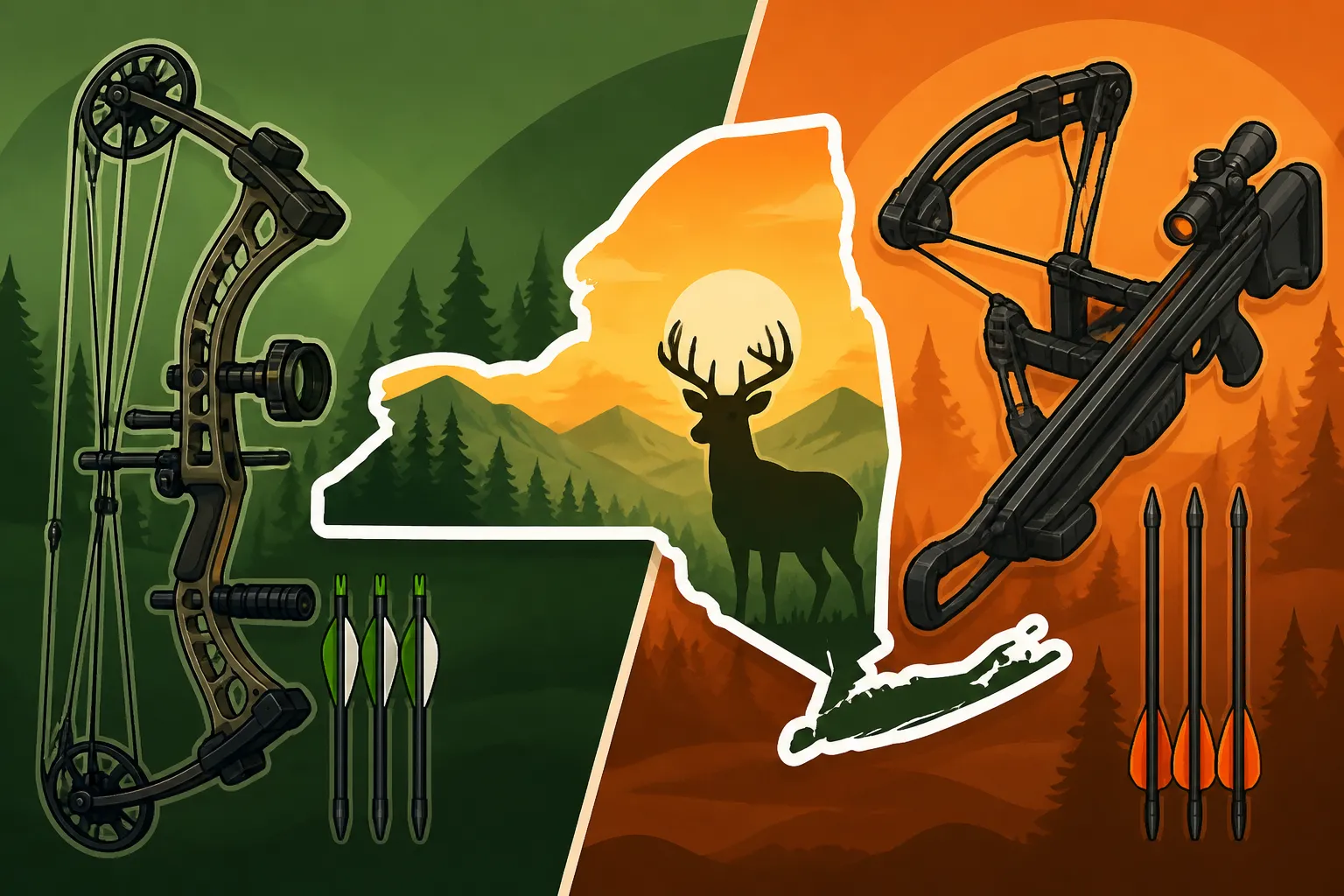
Bow and Crossbow Setups for New York
For many New York hunters, the thought of slipping through the woods during the crisp days of archery season, bow in hand, or setting up a ground blind with a crossbow during those early weeks, is pure magic. But getting your bow or crossbow setup just right can feel like navigating a maze of regulations, equipment choices, and personal preferences, leaving many feeling overwhelmed about where to even begin. This comprehensive guide is here to untangle that complexity, walking you through everything you need to know to build a successful and legal archery or crossbow setup for hunting across New York State.
Understanding New York's Archery Regulations
Before you even think about broadheads and draw weight, you absolutely must understand New York's specific regulations for archery and crossbow hunting. These rules are in place for safety, conservation, and fair chase, and ignorance is never an excuse. Missing a key detail here could mean a hefty fine or worse, losing your hunting privileges. It’s not just about what equipment you can use, but when and where you can use it, and what animals you can pursue.
Archery License and Privilege Requirements
To legally hunt with a bow or crossbow in New York, you need more than just a general hunting license. You also need to possess the appropriate archery or crossbow privilege. For many years, hunters have needed to complete a specific bowhunter education course to obtain a bowhunting privilege, which then allows them to hunt deer and bear during the special archery seasons. This course covers everything from shot placement to recovery ethics and stand safety. It's not just a hoop to jump through; it genuinely prepares you for the unique challenges of bowhunting.
For crossbows, the rules have evolved. While initially restricted, crossbows are now more widely permitted, though specific regulations still apply. Generally, you need a bowhunting privilege to use a crossbow during the archery season. This means that if you're primarily a firearm hunter looking to extend your time in the woods, you'll still need to take that bowhunter education course. Always double-check the current regulations on the New York Crossbow and Bow Regulations page to ensure you're compliant, as laws can and do change.
Legal Minimums and Restrictions for Archery Equipment
New York has clear minimum requirements for bows, designed to ensure a humane harvest. For vertical bows (compound, recurve, longbow), there’s typically a minimum draw weight, often around 35 or 40 pounds, though this can vary slightly based on the animal you’re pursuing. This minimum ensures sufficient kinetic energy to effectively dispatch a deer or bear. You also need to use broadheads with at least two sharp cutting edges and a minimum cutting width. Expandable broadheads are generally legal, provided they meet the minimum cutting width when open.
Crossbows also have their own set of specifications. There are minimum draw weights and minimum arrow (bolt) lengths, along with specific rules regarding broadhead types, similar to vertical bows. Historically, there have been discussions around Crossbow Rules During New York Archery Season and potential changes, particularly concerning limb width limits, so staying informed is paramount. Regardless of your chosen setup, it is your responsibility to ensure every component, from the bow itself to the broadhead on your arrow, meets all state requirements before you ever head into the woods.
Compound Bow Setups for New York Whitetails
Compound bows are incredibly popular for deer hunting in New York, and for good reason. They offer a fantastic blend of speed, accuracy, and relatively easy-to-hold draw weights once at full draw, thanks to their let-off mechanisms. Setting up a compound bow correctly is crucial for maximizing its potential and ensuring ethical shots. It's a system, and each component plays a vital role.
Choosing the Right Compound Bow for You
When selecting a compound bow, the most important factor is fit. A bow that doesn't fit you properly, no matter how expensive or advanced, will hinder your accuracy and consistency. Key fit elements include draw length and draw weight. Your draw length is specific to your body, and most modern compounds are highly adjustable. Having a pro shop measure you and adjust the bow to your precise draw length is non-negotiable. As for draw weight, choose a weight you can comfortably draw and hold, even after sitting in a stand for hours in cold weather. While the state has a minimum, you don't need to max out your bow's capacity. A manageable draw weight allows for smoother draws, less fatigue, and better accuracy, especially when you're bundled up or making a shot from an awkward position.
Beyond fit, consider the bow's axle-to-axle length and brace height. Shorter axle-to-axle bows are often lighter and more maneuverable in tight spots, like dense Adirondack timber or thick Catskill ravines, which can be a huge advantage when treestand hunting. Longer bows can be more forgiving and stable, potentially better for open field edge hunting in the Southern Tier. Brace height influences speed and forgiveness; a longer brace height usually means a more forgiving shot, while a shorter one can generate more speed. Brands like Hoyt, Bowtech, and PSE offer a wide range of models, each with slightly different characteristics to suit various hunting styles and budgets. Don't be afraid to try a few out at an archery shop to see what feels best in your hands.
Sights, Rests, and Stabilizers: Enhancing Accuracy
Once you have your bow, the accessories you add are what truly turn it into a hunting machine. A good sight is paramount for aiming. Most bowhunters opt for a multi-pin sight, allowing for quick adjustments for different distances. Pins are typically set for 20, 30, 40, and 50 yards. Some hunters prefer single-pin movable sights, which offer a cleaner sight picture but require adjustment before each shot. Fiber optic pins are popular for their brightness in low-light conditions, which is often when deer are most active in the early mornings and late evenings. A common frustration is dim pins at legal shooting light, so investing in a quality sight with bright, clear pins is a wise move.
Your arrow rest is another critical component. Drop-away rests are incredibly popular because they support the arrow for maximum accuracy during the draw and initial shot, then drop completely out of the way before the fletchings pass, preventing any contact that could cause flight inconsistencies. Biscuit-style rests are also a solid, simpler option. A stabilizer, while not strictly necessary, can significantly improve accuracy by dampening vibration and adding balance to the bow, making it more stable to hold at full draw. For hunters traversing steep Catskill ground or navigating tight cover, a compact stabilizer might be preferred over a longer one. Experiment with different lengths and weights to find what balances your bow best for your shooting style. GoHunt often features articles and reviews on the latest accessory technologies, helping hunters make informed decisions.
Recurve and Longbow Setups: Embracing Traditional Archery
For a truly primal and deeply satisfying hunting experience, many New York hunters turn to traditional archery with recurve bows or longbows. This style of hunting demands a higher level of skill and discipline, often fostering a deeper connection to the hunt itself. It's a commitment to simplicity and proficiency, and the rewards are immense.
Selecting a Traditional Bow and Arrows
When you step into the world of traditional archery, choosing your bow is a deeply personal decision. Recurve bows, with their limbs curving away from the archer at the tips, typically offer more speed and stability than longbows. Longbows, often a single, continuous curve, are known for their quietness and classic aesthetic. Just like with compounds, draw weight is key. Without the benefit of let-off, you must be able to comfortably draw and hold the full weight for several seconds. Many traditional bowhunters choose a draw weight between 40 and 55 pounds for deer, ensuring enough power for ethical kills while maintaining shootability.
Arrow selection is even more critical for traditional bows than for compounds. Spine — the stiffness of the arrow shaft — must be perfectly matched to your bow's draw weight, your draw length, and the bow's overall characteristics. An incorrectly spined arrow will fly erratically, making accurate shooting nearly impossible. Traditional archers often use wooden, aluminum, or carbon arrows, typically fletched with natural feathers for better clearance off the rest (or hand) and more forgiving flight characteristics. It's not uncommon for traditional archers to spend considerable time "tuning" their arrows to their specific bow, often referred to as "bare shaft tuning," to achieve perfect flight.
Shooting Style and Practice for Traditional Archery
Unlike aiming with pins on a compound sight, traditional archery is often about "instinctive" or "gap" shooting. Instinctive shooting relies on repetitive practice to develop muscle memory and hand-eye coordination, where you simply look at the target and release. Gap shooting involves consciously aiming by placing a certain part of your bow or arrow in relation to the target at different distances. Both methods require an immense amount of practice, more so than with a compound bow, to become proficient and consistent.
You'll spend countless hours on the range, shooting at various distances, from different positions, and under simulated hunting conditions. Many traditional archers favor close-range shots, often limiting their maximum hunting distance to 20 yards or less, which demands exceptional woodsmanship to get close to game. This style of hunting can be particularly effective in tight quarters, like the dense brush and hardwoods found in many New York State Forests. Getting proficient with a traditional bow is a journey, and one that is incredibly rewarding.
Crossbow Setups and State-Specific Rules
Crossbows have become a popular option for many New York hunters, offering a bridge between vertical bows and firearms. They can extend hunting opportunities for those who might struggle with a vertical bow due to physical limitations or those simply looking for a different challenge. However, they come with their own set of considerations and specific rules.
Choosing and Outfitting Your Crossbow
Modern crossbows are powerful, accurate tools. When choosing one, consider its weight, balance, and width. Some crossbows are quite bulky and heavy, which can be a challenge if you're hiking long distances into the Adirondack wilderness or sitting in a small treestand. A more compact design might be preferable for increased maneuverability. Draw weight is generally less of a concern for the shooter, as most crossbows use a cocking device (rope cocker, crank) to draw the string. Speed and kinetic energy are important metrics, ensuring enough power for clean kills.
Outfitting a crossbow typically involves a scope, as most crossbows don't use traditional archery sights. Crossbow scopes are designed for faster arrow speeds and often feature multiple reticles or "dots" for various distances, similar to a multi-pin vertical bow sight. Quality optics are paramount, especially for hunting during those crucial low-light periods. Noise dampeners can also be a valuable addition, as crossbows can be quite loud, and reducing string slap can prevent deer from "jumping the string" at the shot. Remember, just like with vertical bows, you'll need approved broadheads that meet New York's legal requirements for cutting width and number of edges.
Understanding Crossbow Legalities and Usage
New York's regulations surrounding crossbows have evolved, allowing for broader use than in previous years. Generally, you can use a crossbow during the regular bowhunting season if you possess a bowhunting privilege. There are also specific limited seasons or areas where crossbows might be permitted or restricted. For example, during the New York Southern Zone Firearm Season, crossbows are often allowed, but specific rules apply. Always consult the most current DEC hunting regulations guide to be sure of specific dates, Wildlife Management Units (WMUs), and any special provisions.
One of the biggest advantages of crossbows is their ease of use for hunters with physical limitations, allowing more individuals to participate in archery seasons. However, with this ease comes a responsibility to practice diligently. While a crossbow might be easier to aim than a vertical bow, proper shot placement, understanding animal anatomy, and practicing from hunting positions are still critical. You wouldn't just pick up a rifle and head afield without sighting it in and practicing, and the same goes for a crossbow. Get to know your weapon, practice regularly, and always aim for clean, ethical shots.
Essential Bowhunting Accessories Beyond the Bow
Your bow or crossbow is just one piece of the puzzle. A successful, safe, and ethical bowhunting experience in New York relies heavily on a collection of essential accessories. These items might seem small, but they can make or break your hunt, from the moment you leave your truck to the successful recovery of your game.
Broadheads, Arrows/Bolts, and Quivers
Let's talk about what actually takes down the game: your broadheads. For deer and bear in New York, you need razor-sharp broadheads that are designed for penetration and clean cutting. Fixed-blade broadheads are known for their strength and reliability, offering consistent flight if properly tuned. Mechanical (expandable) broadheads fly like field points at higher speeds and open upon impact to create a larger cutting diameter. Both are effective, but consistency and sharpness are key. Always practice with the broadheads you plan to hunt with (or a practice version that flies identically) to ensure they hit where your field points do. A common mistake is assuming they'll fly the same, leading to missed shots or, worse, poorly placed shots.
Your arrows (for vertical bows) or bolts (for crossbows) are equally important. They need to be matched to your bow's draw weight and length, and for crossbows, specific length and weight requirements often apply. Carbon arrows are popular for their durability and consistent flight. Carry enough arrows/bolts in a quiver that keeps them protected and readily accessible. A quiver attached to your bow is convenient for walking to and from your stand, but some hunters prefer a hip or back quiver, especially when navigating dense brush where a bow-mounted quiver might snag. A crucial tip for any New York bowhunter: always carry a small broadhead wrench and a spare broadhead or two, along with a few extra nocks, just in case of an unforeseen issue in the field.
Releases, Rangefinders, and Safety Harnesses
A quality release aid is vital for consistent shooting with a compound bow. A crisp, clean release prevents "string plucking" and ensures the arrow leaves the bow smoothly. There are many types – wrist-strap, thumb-button, hinge – so experiment to find one that feels comfortable and natural for you. Practicing with your chosen release is paramount. For traditional archers, a shooting glove or tab protects your fingers and allows for a smooth release of the string.
A rangefinder is an indispensable tool for bowhunters. Knowing the exact distance to your target is absolutely critical for accurate shot placement with a bow, as trajectory varies significantly even with small distance changes. Even in what looks like flat ground, subtle slopes or dips can throw off your judgment. Many rangefinders offer angle compensation, which is incredibly useful when shooting from a treestand or up/down a steep hill, like those found in the Catskills. Lastly, and most critically, a full-body safety harness is NOT an accessory; it's a non-negotiable piece of life-saving equipment for anyone hunting from an elevated position. Always use one, along with a lifeline, from the moment your feet leave the ground until you're back on solid earth. This is one area where there is zero room for compromise.
Optimizing Your Setup for Different New York Terrains
New York is a state of incredible topographical diversity, from the sprawling, thick Adirondack wilderness to the rolling farmlands of the Southern Tier, and the steep, rugged Catskill Mountains. A bow setup that excels in one area might be a hindrance in another. Tailoring your gear to the specific terrain you plan to hunt can significantly increase your comfort, effectiveness, and overall enjoyment.
Adirondack and Catskill Timber Hunts
Hunting the big woods of the Adirondacks or the steep, unforgiving terrain of the Catskills presents unique challenges for bowhunters. Here, long shots are rare; most encounters will be at close to moderate ranges, often through dense timber and undergrowth. Your setup needs to be quiet, maneuverable, and capable of handling rugged conditions. A shorter axle-to-axle compound bow is often preferred for easier handling in a treestand or when still-hunting through thick cover. Stealth is paramount, so ensure all your gear is quiet – no squeaky cam wheels, rattling arrows, or noisy zippers.
Optics for these areas should prioritize low-light performance. Deer move most actively during dawn and dusk, times when the deep timber is already dark. A quality binocular, perhaps 8×42 or 10×42, will help you spot deer in shadows. Your scope on a crossbow or sight pins on a vertical bow need to be bright and clear. For those who trek deep into the backcountry, a lightweight setup is key. Consider Packs Built for a Multi-Day Backcountry Hunt and ensure your bow or crossbow can be comfortably carried for miles. Rangefinders that quickly acquire targets amidst branches are also a huge asset.
Southern Tier Farmland and Field Edge Hunting
The Southern Tier, with its mix of agricultural fields, woodlots, and rolling hills, offers a different bowhunting scenario. Here, shots might be a bit longer, and opportunities can arise from sitting a field edge or from a strategically placed ground blind near a food source. A bow with a slightly longer axle-to-axle might offer a bit more stability for those potentially longer shots across a cut cornfield or into a distant hedgerow. Accuracy at 30-40 yards becomes more important here.
For ground blind hunting, a crossbow can be an excellent choice, as it's easy to keep cocked and ready, and its compact nature works well within the confines of a blind. Ensure your ground blind is properly brushed in to break up its outline against a field edge. When hunting over open areas, stealth is still important, but your focus might shift slightly to wind direction and entry/exit routes to avoid spooking game. Using a mapping tool like GoHunt or similar platforms can help you identify prime ambush points along field edges, pinch points, and travel corridors where deer are likely to move between bedding and feeding areas.
Maintaining Your Archery Equipment for Longevity
Your bow or crossbow is an investment, and like any fine piece of equipment, it requires regular care and maintenance to perform at its best. Neglecting your gear can lead to diminished accuracy, premature wear, or even a catastrophic failure at the worst possible moment. A little preventative maintenance goes a long way in ensuring your setup is always ready when opportunity knocks.
String and Cable Care
The string and cables on your compound bow or crossbow are the heart of its power system. They are under immense tension and constant stress, so regular inspection and care are critical. Look for any fraying, nicks, or separated strands, especially around the serving where the nocking point and peep sight are tied in. Apply string wax regularly – every few hunts or even more frequently if hunting in wet conditions – to protect the fibers from moisture and wear. A small tube of string wax should be a permanent resident in your hunting pack.
For crossbows, the string and cables also need attention, often even more so due to the higher tensions and friction. The rail that the bolt rides on should be lubricated periodically with specialized rail lube to reduce friction and wear on the string. If you notice significant wear or damage, don't risk it. Take your bow or crossbow to a reputable pro shop immediately for inspection and professional string replacement. Trying to fix complex string and cable issues yourself can be dangerous and lead to further damage.
Broadhead Sharpening and Arrow Inspection
Sharp broadheads are non-negotiable for an ethical harvest. A dull broadhead will push tissue instead of cutting it, resulting in poor penetration and a less humane kill. After every shot, and certainly before the season, inspect your broadheads. Fixed-blade broadheads can be resharpened with a fine stone or specialized sharpening tool. Mechanical broadheads typically require new blades if they've been deployed or if the blades show any sign of dullness or damage. Always handle broadheads with extreme care; they are incredibly sharp and demand respect.
Beyond broadheads, regularly inspect your arrows and bolts. Check carbon shafts for cracks or splinters, especially near the nock and point inserts. Inspect aluminum arrows for bends. Make sure fletchings are firmly attached and not bent or creased. Replace damaged nocks and ensure inserts are still secure. A damaged arrow can fly erratically or even break upon release, potentially causing injury or, at the very least, a missed opportunity. Your arrows are your ammunition; treat them with the same respect you would rifle cartridges.
Practice and Preparation: The Key to Success
No matter how advanced your bow or crossbow setup is, it's only as good as the shooter behind it. Consistent, disciplined practice is the single most important factor in becoming an effective and ethical bowhunter. It's not just about hitting the target; it's about developing confidence, muscle memory, and the mental fortitude to perform under pressure when a deer steps into your shooting lane.
Consistent Target Practice and Form Development
The archery range should be your second home in the months leading up to the season. Consistent practice helps build muscle memory, solidifies your shooting form, and allows you to identify and correct bad habits before they become ingrained. Focus on proper stance, grip, anchor point (for vertical bows), aiming, and a smooth follow-through. Don't just fling arrows; make every shot count. Shoot at various distances, from 20 to 50 yards (or your comfortable maximum hunting range), to understand your arrow's trajectory and your sight's capabilities.
It's easy to get lazy and just shoot from a comfortable stance on flat ground. But deer rarely present themselves in such ideal scenarios. Incorporate realistic hunting simulations into your practice routine. Shoot from a sitting position, kneeling, or even from one knee. If you hunt from a treestand, practice shooting from an elevated platform to understand how angles affect your shot. Practice in full hunting clothing, not just a T-shirt, to ensure your gear doesn't impede your draw or release. Regularly check your bow's tuning and ensure your broadheads are flying true.
Simulating Hunting Scenarios and Mental Preparation
The moment of truth in bowhunting is often characterized by adrenaline and nerves. To prepare for this, you need to simulate hunting scenarios. Practice shooting quickly but accurately, within a short window of opportunity. Set up 3D targets in natural settings, mimicking the angles and obstructions you might find in a New York woodlot. Practice drawing your bow silently, holding at full draw for an extended period, and then executing the shot. This helps build the physical strength and mental endurance needed for a real hunting situation.
Mental preparation is just as crucial as physical practice. Visualize successful hunts, visualize making ethical shots, and visualize the entire process from spotting a deer to recovery. Understand shot placement on a deer's anatomy thoroughly; know precisely where to aim for the vitals. Be honest with yourself about your effective range and stick to it. If you can consistently hit a pie plate at 30 yards, then 30 yards is your maximum. Passing on a questionable shot, even when your heart is pounding, is a sign of a responsible and ethical hunter. Hunting the Rut in the Southern Zone or Hunting the Rut in the Northern Zone can be particularly exciting times to apply these skills, as deer movement increases.
Choosing the Right Season and Area for Bowhunting
New York offers a wealth of opportunities for bowhunters, but understanding the nuances of different seasons and geographic zones can significantly impact your success. The state is broadly divided into the Southern Zone and Northern Zone, each with its own calendar and unique characteristics that influence deer behavior and hunting tactics. Knowing when and where to focus your efforts, and what animals you can pursue, is key to making the most of your bowhunting season.
Southern Zone Archery Opportunities
The Southern Zone of New York typically offers a generous archery season that starts in early October, well before the firearm season opens. This early season is often characterized by warmer temperatures, full foliage, and deer that are still on a fairly predictable pattern, transitioning from summer food sources. It's a fantastic time to pattern deer moving between bedding areas and agricultural fields or oak flats. For hunters in areas like the Finger Lakes or the Southern Tier, this often means setting up on field edges or in timbered travel corridors connecting different food sources. Hunting Southern Tier Farmland Deer often involves scouting these transitional areas.
The Southern Zone also features a late archery season, often coinciding with the holiday period, which provides another chance to fill tags after the firearm seasons have concluded. By this time, deer are often focused on available food sources, making them more concentrated and sometimes easier to pattern. The Hunting the Late Southern Zone Archery Reopener can be a productive time, though hunters should be prepared for colder weather and potentially snow. Crossbows are generally permitted during both these archery seasons, provided you hold the correct privilege, offering flexibility for many hunters.
Northern Zone and Special Archery Seasons
The Northern Zone, encompassing the vast Adirondack wilderness, has a shorter, earlier archery season compared to the Southern Zone, typically opening in late September. This is due to the harsher winters and lower deer densities found in this region. Hunting the Northern Zone with a bow is a true challenge, often requiring extensive scouting, deep woods knowledge, and a commitment to still-hunting or carefully placed stands along natural funnels or traditional deer runs. Hunting the Rut in the Northern Zone with a bow requires exceptional woodsmanship to get close to these often wary animals.
Beyond the main deer seasons, New York also offers specific archery opportunities for other game. Bear can be harvested during the deer archery season, providing an exciting dual opportunity for those hunting in traditional bear country like the Catskills or the Adirondacks. It's always a good idea to confirm the specific regulations for bear during the archery season. While less common for bowhunting, some hunters also pursue fall turkeys with bows, though this requires specialized tactics and extreme stealth. Always consult the New York Deer Seasons by Zone and New York Bear Season by Zone for the precise dates and regulations for your target area.
Final Preparations and Ethical Considerations
With your bow or crossbow setup dialed in and your practice consistent, the final steps involve preparing for the actual hunt and internalizing the ethical responsibilities that come with being a bowhunter in New York. These details, though sometimes overlooked, are crucial for a successful and respectable season.
Packing Your Day Pack and Emergency Gear
Your day pack should be as well thought out as your bow setup. Beyond your arrows and release, essential items include a sharp field dressing knife, a small first-aid kit, flagging tape for blood trailing, a headlamp (even for daytime hunts, you never know when you'll need it), and a grunt tube or rattling antlers if you plan to Rattling and Grunting in New York. Water, snacks, and a reliable compass or GPS unit are also vital, especially when venturing into vast public lands where cell service is unreliable, which is common in many parts of the state.
Always carry a fully charged phone, but don't rely on it for navigation or emergencies in remote areas. A personal locator beacon (PLB) is a wise investment for deep wilderness hunts. Dress in layers, adapting to New York's often unpredictable weather. Ensure you have blaze orange or pink in your pack for retrieval or if required during a later part of the season. Knowing how to field dress your animal quickly and efficiently is paramount, especially during warmer early archery days. Field Dressing a Deer in Cold Weather has different challenges than in October.
Ethical Bowhunting and Respect for the Game
Ethical bowhunting demands respect for the animal, the land, and fellow hunters. This means taking only high-percentage shots within your proven effective range. It means passing on a shot if you're not absolutely confident in a clean kill. It means understanding deer anatomy and aiming for the vital organs. After the shot, it means waiting a sufficient amount of time before beginning your Blood Trailing After Dark in New York, typically 30 minutes to an hour for a well-placed shot, and much longer (4-6 hours or more) for questionable hits, especially if the animal was not visibly hit in the vitals. Patience in tracking is a virtue that increases recovery rates.
Always strive to leave the land better than you found it. Pack out all your trash, including broadhead packaging and empty water bottles. Respect private property boundaries and obtain explicit permission before entering private land, even for game retrieval. By upholding these ethical standards, you not only honor the animal you pursue but also ensure the future of bowhunting in New York for generations to come.
Disclaimer
This article is for general informational purposes only and does not constitute professional advice. Laws, prices and regulations vary by location and change over time. Consult a qualified professional for guidance on your specific situation.