Hudson Valley Public Hunting Ground
Hunting public land in the Hudson Valley can feel like searching for a needle in a haystack, especially when you're used to the vast tracts up north or the sprawling farmlands out west. It’s a region of stunning beauty and rich history, but also of dense population and fragmented habitat, which can make finding good hunting ground a real headache. This guide is here to walk you through navigating the unique challenges and opportunities of hunting public land in the Hudson Valley, helping you uncover those hidden gems and make the most of your time afield.
The Realities of Public Hunting in the Hudson Valley
Let's be honest, if you're a hunter in the Hudson Valley, you know the struggle is real. Unlike the vast, uninterrupted wilderness of the Adirondacks or the extensive State Forests of the Southern Tier, public hunting ground here often comes in smaller, more dispersed parcels. You're constantly balancing the desire for solitude with the reality of competing pressure from other hunters, hikers, birdwatchers, and mountain bikers. This isn't necessarily a bad thing, but it certainly requires a different mindset and strategy than hunting deep timber.
The population density here means that even small pockets of woods can see significant activity, and deer and other game often become accustomed to human presence, albeit with a healthy dose of caution. This can make them incredibly challenging to pattern, as their movements are influenced not just by food and cover, but also by the ebb and flow of human disturbance. You might find a prime bedding area, only for it to be disrupted by a dog walker at dawn. Understanding this dynamic is the first step to becoming a successful public land hunter in the Hudson Valley.
Furthermore, getting permission to hunt private land, while always a worthwhile endeavor, can be particularly tough in areas where landowners are wary or where properties are smaller and more intensely managed for non-hunting recreation. That's why maximizing your understanding and use of public access is so crucial. Don't get discouraged by the initial perception of limited space; with the right approach, there are genuine opportunities to be had.
Exploring State Forests: Your Green Havens
New York State Forests, sometimes called Multiple Use Areas (MUAs), are often your best bet for consistent public hunting access in the Hudson Valley. These lands are managed by the DEC for a variety of uses, including timber production, recreation, and wildlife habitat. While they might not offer the same raw wilderness experience as the Forest Preserve lands further north, they provide critical habitat corridors and hunting opportunities for a variety of game species. The key is knowing how to find them and, more importantly, how to hunt them effectively.
These forests are typically larger than Wildlife Management Areas (WMAs) and often less intensively managed for specific game populations, offering a more natural hunting experience. You'll find a mix of mature hardwoods, regenerating clearcuts (which can be deer magnets!), and sometimes swampy lowlands. Vehicle access can vary, with some having well-maintained roads and parking areas, while others might require a good walk in from a roadside pull-off. Always check the specific rules for each State Forest, as some may have unique regulations regarding camping or ATV use. Camping Rules on New York State Forest Land is a good resource to review before heading out.
When scouting these areas, pay close attention to topography and vegetation changes. Look for natural funnels, saddlebacks, and benches that deer might use to travel between feeding and bedding areas. Don't be afraid to walk a little further than the average hunter, pushing past the initial access points. Tools like onX Hunt are incredibly valuable here, allowing you to clearly see property boundaries, topo lines, and potential access routes, helping you identify those overlooked corners away from the crowds.
Popular State Forests with Hunting Opportunities
The Hudson Valley boasts several State Forests that offer decent hunting. These aren't pristine wilderness, but they offer solid opportunities if you put in the legwork. Think about places like Beebe Hill State Forest in Columbia County, which offers a mix of hardwoods and conifer stands, or Taconic Uplands Multiple Use Area further south. These areas, while perhaps not household names for hunters statewide, provide local access points that can be surprisingly productive.
Wassaic Multiple Use Area in Dutchess County is another spot worth looking into, often with good turkey and deer populations. The terrain can be quite varied, from rolling hills to steeper slopes, providing diverse habitat. Remember, consistency in scouting and hunting is often rewarded more than finding a "secret spot" that doesn't exist. You'll often find success by understanding how deer use these fragmented landscapes and adjusting your tactics accordingly.
It's crucial to understand that these State Forests, while offering public access, are still subject to significant pressure. Opening day of firearm season might feel like a circus near parking areas. To counteract this, consider hunting during the week, or focusing on less popular methods like still-hunting or Hunting a Funnel Between Two Swamps in areas that require more effort to reach. The deer are there, but they’ve learned to be wary.
Navigating Access and Pressure
The biggest hurdle in these State Forests is often the sheer number of people. Hunters, hikers, dog walkers – everyone wants to enjoy these green spaces. This means you need to be extra vigilant about safety, wearing blaze orange or blaze pink as required, and always identifying your target. It also means being courteous and understanding that you're sharing the woods.
To find less pressured areas, spend time with a map. Identify sections that are a mile or more from common parking lots or trailheads. Look for features that create natural barriers to human movement, such as steep ravines, dense thickets, or wet swampy areas. These are often where deer will seek refuge. Remember, a deer's home range might be small, and they will adapt their movements to avoid perceived threats. Using mapping apps to mark these less-traveled spots can be a game-changer.
Furthermore, consider hunting during periods of less activity. The middle of a weekday or during inclement weather can significantly reduce competition. Early archery season, before the gun hunters are out in force, can also offer quieter opportunities. When New York's Archery Season Opens can provide useful context here. The deer are still there, they just move differently when human presence is high.
Wildlife Management Areas: Concentrated Opportunity
New York's Wildlife Management Areas (WMAs) are tracts of land specifically acquired and managed by the DEC for wildlife habitat and public recreation, with a strong emphasis on hunting and trapping. In the Hudson Valley, WMAs tend to be smaller than State Forests but are often intensely managed to produce specific types of game, making them highly productive for certain species. However, their very nature of being "managed for wildlife" also means they tend to attract a lot of hunter attention.
WMAs often feature a diverse array of habitats, from wetlands and grasslands to young forest cuts and mature timber. This mosaic of habitat benefits a wide range of species, from waterfowl and pheasants to deer, turkey, and various small game. Management activities might include controlled burns, food plots, or specific timber harvest operations, all designed to enhance wildlife populations. This can be fantastic for hunters, as you know the habitat is designed to be productive.
However, the focused management and generally better access can also lead to higher hunting pressure, especially on popular WMAs. It's a trade-off: great habitat, but you'll likely be sharing it with more people. Success on WMAs often comes down to scouting thoroughly, understanding typical game movement patterns under pressure, and being willing to adapt your tactics.
Key Hudson Valley WMAs and Their Offerings
One of the most notable WMAs in the region is Bashakill WMA in Sullivan and Orange counties. It's renowned for its wetlands, making it a hotspot for waterfowl and furbearers, but also provides good deer and turkey hunting in its upland areas. The sheer size and diversity of habitat make it a complex but rewarding area to explore. New York Waterfowl Hunting by Zone offers more specific details on waterfowling regulations in the region.
Another significant area is the Stewart State Forest (which often functions much like a WMA in terms of management and public access, despite its "State Forest" designation) near Newburgh. This large tract offers extensive opportunities for deer, turkey, and small game. Its old military base history means a unique landscape, with some open fields and brushy areas mixed with woodlands. Due to its size, there are certainly pockets where you can find solitude if you're willing to walk.
Always check the DEC website or the specific WMA kiosks for any special rules or restrictions. Some WMAs might have designated parking areas, specific seasonal closures, or even archery-only sections. This level of detail is important for a successful and legal hunt.
Strategies for High-Pressure WMAs
Hunting a WMA, especially one that sees a lot of traffic, requires a smart approach. First, prioritize early season or late season hunts when pressure tends to be lower. For deer, the early archery season can be fantastic before the woods fill up with blaze orange. Hunting the Late Southern Zone Archery Reopener is a great time to be out. For small game, weekdays after the initial rush can be productive.
Second, think about terrain and cover that other hunters avoid. Steep hillsides, dense briar thickets, or deep, mucky swamps that require considerable effort to traverse are often where the biggest bucks and most elusive turkeys will hide. Most hunters stick to easy-access areas. Using topo maps and aerial imagery, perhaps with a tool like GoHunt or onX Hunt, you can identify these overlooked sanctuaries and plan your approach.
Lastly, consider alternative hunting methods. Instead of just sitting on a well-known travel corridor, try still-hunting through thick cover, or use a ground blind tucked into an overlooked brushy corner. Using a Ground Blind on New York Public Land can be incredibly effective in areas where treestand options are limited or where you need to blend into dense vegetation near a food source. The more flexible and adaptable you are, the better your chances on these often-pressured grounds.
Targeting Whitetails in the Hudson Valley's Public Woods
Whitetail deer are, without a doubt, the most popular game animal pursued in the Hudson Valley. While the region may not be known for Boone and Crockett scores like some parts of the Midwest, it consistently produces healthy numbers of deer, and respectable bucks are harvested every year. The challenge isn't necessarily finding deer, but finding deer that haven't been pushed and pressured by human activity.
The deer population in the Hudson Valley has adapted to a mosaic landscape of suburban development, agricultural fields, and woodlots. This means they are often quite nocturnal, especially older bucks. They utilize every shred of available cover, from overgrown fencerows to small swamp islands. Understanding their movement patterns in response to human presence is far more critical than simply finding a "big woods" deer sign. Hunting Southern Tier Farmland Deer provides tactics that can often be adapted to the agricultural edges and woodlots of the Hudson Valley.
Success hinges on detailed scouting, both before and during the season. Look for pinch points where natural and man-made features force deer into narrow travel corridors. These might be tight spots between a housing development and a woodlot, a bottleneck created by a stream and a steep hill, or the edge of a standing cornfield. Deer will often choose the path of least resistance, or the path of most cover, and that's where you want to intercept them.
Reading the Landscape for Deer Sign
When you're out scouting, don't just look for tracks and droppings. Try to read the entire landscape. Where are the likely bedding areas – often dense, secure cover with good visibility or scent-checking ability? Where are the primary food sources – acorns, soft mast, browse, or agricultural crops? Then, connect the dots. Look for worn trails, rubs, and scrapes that indicate how deer are moving between these critical areas. Reading Aerial Photos for Southern Tier Deer can teach you how to analyze these patterns from home.
In the Hudson Valley, deer will often utilize even small patches of cover to hide during the day, emerging under the cover of darkness to feed. Look for thick, brushy transition zones or areas with dense saplings, especially on north-facing slopes or in stream bottoms where thermal cover might exist. These pockets can hold deer even when the surrounding woods appear open.
Wind direction and thermals are also critical, especially on hillier ground. Deer nearly always use the wind to their advantage. A morning thermal will often pull scent uphill, while an evening thermal will push it downhill. Plan your approach and stand placement to keep your scent out of a deer's nose. Wind and Thermals on a Catskill Ridge offers insights that apply to the varied topography of the Hudson Valley.
Bowhunting and Firearms Seasons
The Hudson Valley falls within New York's Southern Zone, which means a generous archery season, followed by the regular firearm season, and then a late archery/muzzleloader segment, often including the popular Hunting the Southern Zone Holiday Hunt. Each season offers unique advantages and challenges.
Bowhunting in the early season (September-October) can be excellent, as deer are often still on predictable summer patterns and less pressured. Focus on food sources like acorn flats or apple orchards. As the rut approaches in November, deer activity picks up dramatically. Hunting the Rut in the Southern Zone is prime time for cruising bucks, and you might have good success with rattling or grunt calls.
During the firearm season, deer become much more wary due to increased pressure. Drives can be effective on larger public parcels, especially if you have a group of hunters familiar with the terrain. For individual hunters, targeting thick cover or areas that are difficult to access becomes even more important. The late muzzleloader and holiday hunts offer another chance, especially if snow is on the ground, making deer easier to track and forcing them to concentrate on limited food sources.
Beyond Deer: Other Game on Public Ground
While whitetails dominate the conversation, the Hudson Valley's public lands offer fantastic opportunities for a variety of other game species. Don't overlook these possibilities; they can provide some incredibly fun and challenging hunts, often with less competition than deer season.
Wild turkeys are thriving across much of the Hudson Valley, and both spring and fall seasons offer excellent hunting. Black bears, too, have expanded their range significantly and are increasingly common, particularly in the more rugged, undeveloped western portions of the region closer to the Catskills. And for those who enjoy fast-paced action, there's always a healthy population of small game to pursue.
Diversifying your hunting pursuits can make you a more well-rounded outdoors person and keep you engaged in the field throughout more of the year. Plus, sometimes a successful squirrel or rabbit hunt is just what you need to boost morale when the deer aren't cooperating.
Turkeys in the Hudson Valley
New York's spring turkey season is a highly anticipated event, and the Hudson Valley offers some fantastic gobbler hunting. Public lands like State Forests and WMAs often have healthy turkey populations. Look for areas with a mix of mature hardwoods (for roosting), open fields or forest clearings (for strutting and feeding), and water sources. Calling a New York Gobbler Off the Roost requires patience and good woodsmanship.
Fall turkey hunting is a different ballgame, focusing more on breaking up flocks and calling birds back together. This can be incredibly rewarding and provides a chance to harvest a hen for the table. The key is to find where the birds are feeding, often in oak forests during good acorn years or around agricultural fields. Hunting New York's Fall Turkey Season offers different strategies for this exciting challenge.
Turkey hunting on public land can be challenging due to other hunters, but turkeys often range widely, so if one spot is pressured, another might be quiet. Be prepared to cover ground and adapt your calling based on the birds' mood.
Bear Hunting Opportunities
Black bears are making a strong comeback throughout New York, and the Hudson Valley is no exception. While the Catskills are traditionally known for their bear hunting, sightings and harvests are increasing in counties like Orange, Ulster, Sullivan, and even further east. Bears are incredibly intelligent and elusive animals, making a successful bear hunt a significant accomplishment. New York's Black Bear Population provides more background on their distribution.
Bear season in the Southern Zone often overlaps with deer season, giving you a chance at both. Focus your efforts on areas with abundant natural food sources: oak ridges during acorn years, stands of beech nuts, or berry patches. Bears will travel long distances to capitalize on food. Scouting for bear sign – scat, torn-up logs, claw marks on trees – is crucial. Hunting Bears Over Natural Food Sources is key, as baiting is not permitted in New York.
Bear hunting on public land is often a waiting game, or involves extensive still-hunting through known bear country. Good optics are essential for spotting bears at a distance, especially when they are feeding on distant slopes. Patience, keen observation, and an understanding of bear behavior are your most valuable tools.
Small Game and Furbearers
Don't forget about the myriad of small game and furbearers that call the Hudson Valley home. Squirrels, rabbits, grouse, and pheasants (especially near stocked areas) can provide thrilling hunts. These species are often found in the same State Forests and WMAs you hunt for deer and turkey, offering year-round opportunities.
For squirrels, focus on oak and hickory ridges, especially during a good mast year. Listen for cuttings and chatter. Squirrel Hunting a New York Oak Ridge can be a great way to introduce new hunters to the sport or to simply enjoy a quiet day in the woods. Rabbit hunting often involves pushing thick brush piles and briar patches, sometimes with the help of beagles, making for a fast-paced hunt. Rabbit and Hare Hunting in New York describes the chase.
Grouse and woodcock can be found in regenerating timber cuts, alder runs, and dense, young forest habitat. While grouse numbers have been declining statewide, pockets of good habitat still exist in the Hudson Valley. Hunting them often involves walking extensively through thick cover. Grouse Hunting New York Aspen Cover shares habitat insights that apply to similar cover types in the Hudson Valley. Many of these small game seasons open well before deer season, providing an excellent excuse to get out and scout your deer grounds while carrying a shotgun.
Essential Strategies for Success on HV Public Ground
Hunting public land in the Hudson Valley demands a strategic and adaptable approach. You're not just hunting game; you're also managing your expectations and navigating the challenges of a more populated and pressured environment. Having a solid game plan that combines thorough scouting with smart hunting tactics will dramatically increase your chances of success.
It's all about understanding both the wildlife and the human element. The deer and turkeys here are savvy, having learned to coexist with people, but they also use human activity to their advantage by moving into areas where they feel safe. Your job is to identify those safe zones and figure out how to access them without inadvertently pushing game out or alerting other hunters.
Don't be afraid to experiment. What worked for your grandfather in the Adirondacks might not translate directly to a Hudson Valley State Forest. Be open to new ideas, new locations, and new ways of approaching your hunt. Every time you step into the woods, it's a learning opportunity, regardless of whether you punch a tag.
Pre-Season Scouting and Mapping Tools
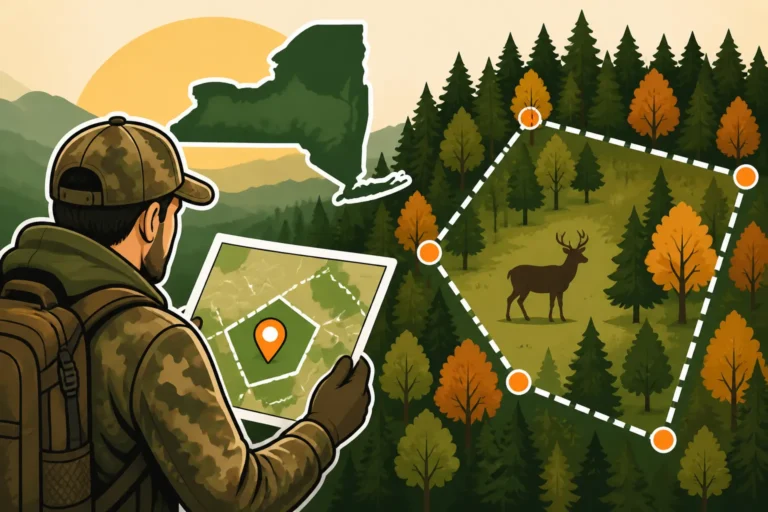
Scouting is paramount, and in the Hudson Valley, it starts long before you step foot in the woods with a bow or gun. Begin with aerial photos and topographic maps. Services like onX Hunt or GoHunt are incredibly valuable for this. They allow you to pinpoint public land boundaries, identify potential access points, locate thick cover, and map out elevation changes that could create funnels or thermal hubs. You can literally spend hours "e-scouting" from your couch, narrowing down potential spots before you even burn a drop of gas.
Once you have a few promising locations, hit the ground. Scout in the off-season, during spring and summer, to avoid disturbing game right before or during hunting season. Look for old sign, assess the density of cover, and check for current food sources. Pay attention to how trails (both human and deer) intersect the landscape. Identify where the majority of other hunters might access an area and then look for ways to get around or beyond them. Scouting New York Public Land Before Season is always time well spent.
A good GPS or mapping app on your phone (download offline maps!) is non-negotiable. Knowing exactly where you are in relation to property lines, roads, and other hunters is crucial for safety and legality. This also allows you to silently mark promising spots, rubs, scrapes, or bedding areas for later reference.
Adapting to Pressure
The biggest factor influencing game behavior on Hudson Valley public land is pressure. Deer and turkeys learn very quickly where the pressure is coming from and will adjust their movements to avoid it. This means that hot sign one day might be cold the next if too many hunters move through.
One effective strategy is to hunt the "transition zones" or "sanctuaries." These are often pockets of thick, overlooked cover located between heavier pressured areas and private land where game feels safe. Deer will often stage in these spots during daylight hours, waiting for evening to move into more open feeding areas. Accessing these spots stealthily and setting up quietly is key.
Consider hunting periods when pressure is naturally lower. Weekdays, especially mid-week, can be significantly quieter than weekends. Hunting during inclement weather, such as light rain or snow (if you're prepared for it), can also reduce human activity and sometimes even get deer on their feet. Lastly, being willing to hike further than others is almost always a successful tactic. Finding Ground Others Walk Past is a principle that pays dividends in pressured areas.
Safety and Ethics in a Populated Region
Hunting in the Hudson Valley demands an extra layer of attention to safety and ethical behavior. You are sharing the woods with a diverse group of users, and maintaining a positive public image for hunters is essential.
Blaze Orange/Pink: Always adhere strictly to blaze orange or blaze pink requirements during firearm seasons. Even during archery seasons when not legally required, consider wearing a patch or hat for visibility when walking in or out, especially if other hunters might be around. Your personal safety is paramount. How Much Blaze Orange New York Requires is a must-read.
Property Lines: Know your boundaries. Use a reliable mapping tool like onX Hunt to ensure you are always on public land or land where you have explicit permission. Trespassing is not only illegal but can severely damage hunter-landowner relations. New York Trespass and Permission Law outlines the specifics.
Respect Other Users: Be courteous to hikers, birdwatchers, and other outdoor enthusiasts. A simple nod or "good morning" goes a long way. Minimize your impact on the land by packing out everything you pack in, and leave no trace. Your behavior reflects on all hunters.
| Public Land Type | Typical Size | Management Focus | Primary Game Species | General Pressure Level | Unique Challenges |
|---|---|---|---|---|---|
| State Forests/MUAs | Medium to Large (1,000s acres) | Timber, recreation, wildlife habitat | Deer, Turkey, Bear, Small Game | Moderate to High | Dispersed, varied terrain, multi-use conflicts |
| Wildlife Management Areas (WMAs) | Small to Medium (100s-1,000s acres) | Intensive wildlife habitat management | Deer, Turkey, Waterfowl, Pheasant, Small Game | High | Very high hunter density, specific regulations, smaller size |
| Catskill Forest Preserve | Very Large (10,000s acres) | Wilderness preservation, recreation | Deer, Bear, Turkey, Small Game | Low to Moderate (remote areas) | Extremely rugged, long walks, navigation challenges |
| Hudson Highlands State Park Preserve | Medium (1000s acres) | Passive recreation, conservation | Deer (often archery only) | High (for recreation) | Very high hiker traffic, limited hunting access zones |
Disclaimer
This article is for general informational purposes only and does not constitute professional advice. Laws, prices and regulations vary by location and change over time. Consult a qualified professional for guidance on your specific situation.