Muzzleloader Deer Hunting in New York
The crisp chill of late fall and early winter in New York State brings a unique challenge and opportunity for deer hunters. For many, the regular firearm season feels too short, and the thought of packing away your gear until next year can be a real letdown. But here in New York, the muzzleloader season offers a fantastic extension, giving you more time in the woods and a chance to experience a different kind of hunt. This comprehensive guide will walk you through everything you need to know about hunting deer with a muzzleloader in New York, from understanding the regulations and choosing your equipment to mastering the tactics that will help you fill your tag when the temperatures drop.
Understanding New York's Muzzleloader Seasons
New York's muzzleloader seasons are a true gift for hunters who cherish those quieter, colder days afield. While they often run concurrently with other seasons, there are also dedicated periods where only muzzleloaders are allowed, giving you a chance to hunt with less pressure. Understanding these windows is key to planning your late-season adventures.
Southern Zone Muzzleloader Opportunities
For hunters in the Southern Zone, the muzzleloader season is strategically placed to offer extended opportunities. It generally opens a bit earlier than the regular firearm season, often overlapping with the tail end of the archery season, and then offers a significant post-firearm season window. This late-season stretch, typically running for about a week to ten days in December, is when many muzzleloader enthusiasts truly shine. Imagine being out there in fresh snow, the woods hushed, with deer focused on their last remaining food sources before winter really sets in. This is a prime time to be in the woods with a smoke pole. You might find deer still somewhat active from the rut, but more importantly, they're starting to settle into their winter patterns, making them a bit more predictable if you know where to look. This post-firearm season also provides a chance for those who might have missed out during the rifle season to still tag a deer, pushing your hunting into colder, often snowier, conditions. For detailed dates, always check the current DEC regulations, but generally, this late December window is when the magic happens. Many hunters often utilize this extended season, sometimes even after the main New York's Southern Zone Firearm Season has concluded.
Northern Zone and Holiday Hunt Windows
The Northern Zone, with its rugged terrain and often harsher winters, offers a slightly different muzzleloader calendar. The season here typically starts earlier in October, often overlapping with some of the later archery days, and then runs concurrently with the regular Northern Zone firearm season. The real highlight for many muzzleloader hunters in the Northern Zone isn't a post-firearm season, but rather the ability to use these traditional firearms during the main big game season. The Northern Zone generally does not have the specific "Holiday Hunt" extension that some Southern Zone WMUs do, which means precise timing is crucial for your hunts up there. The Northern Zone experience is often about deep woods hunting, covering vast tracts of state land where a reliable, accurate muzzleloader can be a true asset. Understanding the unique challenges of hunting in the Adirondacks or Tug Hill Plateau during these periods is paramount.
Muzzleloader-Only Weeks and Permit Hunting
The most anticipated periods for many New York muzzleloader hunters are the dedicated muzzleloader-only weeks. These are specific timeframes when only muzzleloaders (and archery equipment) are permitted, reducing the overall pressure from modern firearms. These weeks can be incredibly productive, as deer often revert to more natural movement patterns without the constant disturbance of high-powered rifles. In the Southern Zone, this usually means a late-season window that extends your deer hunting well into December, long after most other seasons have closed. For those looking to maximize their deer harvest, these muzzleloader-only periods are also an excellent time to fill any remaining Deer Management Permits (DMPs). Many wildlife management units (WMUs) have liberal DMP quotas, and using these late-season opportunities can be critical for herd management and putting more venison in the freezer. Knowing which WMUs offer unlimited or high DMP allocations, and applying for them, is a smart strategy. You can find more information about these extended opportunities by researching New York Muzzleloader Season Tactics and New York Deer Management Permits Explained.
Muzzleloader Regulations and Legalities in New York
Diving into muzzleloader hunting means understanding a distinct set of rules that differ from modern firearms. New York State has specific regulations to ensure safety and maintain the traditional spirit of muzzleloading. It's not just about picking up any old "black powder" gun; there are caliber, projectile, and accessory requirements you need to be familiar with.
Approved Muzzleloader Types and Calibers
In New York, any legal muzzleloader must be loaded from the muzzle, including the projectile and the powder. This means no breech-loading systems unless they are specifically designed as a muzzleloader. For deer and bear hunting, your muzzleloader must be at least .44 caliber. While .44 and .45 are certainly legal and capable of harvesting deer, the .50 caliber is arguably the most popular choice among New York muzzleloader hunters due to its excellent ballistics and wide array of projectile options. Single-shot muzzleloaders are the standard, and you generally can’t have a magazine or any system that allows for rapid multiple shots. You’re typically limited to a single projectile per shot – no buckshot or birdshot when hunting big game. This strict adherence to single-projectile, muzzle-loaded firearms reinforces the classic hunting experience, demanding a more deliberate approach to each shot.
Propellant and Projectile Rules
When it comes to what you put down the barrel, New York regulations are clear. You must use black powder or an approved synthetic substitute like Pyrodex or Triple Seven. Smokeless powder, while used in some modern "smokeless muzzleloaders" in other states, is strictly prohibited for hunting in New York. This is a critical distinction, as using smokeless powder in a traditional muzzleloader can be extremely dangerous. For projectiles, you're generally looking at conical bullets, round balls, or saboted bullets. Conical bullets and round balls are solid lead projectiles that fit snugly into the bore, while sabots are plastic sleeves that allow a smaller-diameter bullet (often a pistol bullet) to be fired through a larger bore. Sabots are very popular for their accuracy and velocity, especially with modern inline muzzleloaders. Always ensure your chosen projectile is a single, legal projectile designed for big game hunting.
Optics, Sights, and Accessories
One of the defining characteristics of New York's muzzleloader regulations is the allowance for optics. Unlike some states that restrict muzzleloaders to open or peep sights, New York permits the use of scopes during the muzzleloader season. This is a significant advantage, especially in the low light conditions common during late fall and early winter, or when trying to pick out a deer in thick timber. A good, low-power scope (like a 1-4x or 2-7x) can drastically improve your accuracy and confidence. However, there are no specific limitations on magnification. Additionally, fiber optic sights are also allowed and can be a great alternative for those who prefer open sights but want better visibility in dim light. The key is that the sighting system must be mounted directly to the muzzleloader itself; no external laser sights or electronic targeting devices that project onto the animal are generally permitted, keeping the spirit of the hunt intact.
Choosing the Right Muzzleloader for New York Conditions
Selecting a muzzleloader isn't just about picking one off the shelf; it's about finding a reliable partner for New York's diverse hunting conditions. From the deep woods of the Adirondacks to the farmlands of the Southern Tier, your muzzleloader needs to be accurate, dependable, and capable of withstanding whatever Mother Nature throws at it.
Inline vs. Traditional Designs
When you first look at muzzleloaders, you'll generally encounter two main categories: inline and traditional (flintlock or percussion cap). Inline muzzleloaders, like many popular models from CVA or Traditions, are often favored by modern hunters. They resemble modern rifles more closely, with center-fire rifle-style primers (like 209 shotshell primers) that ignite the powder directly behind the projectile. This design generally leads to more consistent ignition, better accuracy, and easier cleaning. They are very popular for their user-friendliness and performance, especially for those transitioning from centerfire rifles.
Traditional muzzleloaders, on the other hand, offer a more historical hunting experience. Flintlocks use a flint to strike a frizzen, creating a spark to ignite a small pan of priming powder, which in turn ignites the main charge. Percussion cap rifles use a small cap struck by a hammer to ignite the powder. Both require more attention to detail, especially in wet weather, as keeping the pan and cap dry is paramount. While arguably more challenging, many hunters cherish the connection to history and the unique satisfaction of harvesting an animal with a traditional black powder firearm. In New York's often damp, snowy late season, the reliability of an inline can be a significant advantage, though dedicated traditionalists make it work beautifully with careful preparation.
Caliber Considerations for Whitetails and Bears
As mentioned, New York requires a minimum of .44 caliber for big game. While .44 and .45 are perfectly legal, the .50 caliber reigns supreme for good reason. A .50 caliber projectile typically carries more energy and can create a larger wound channel, increasing the likelihood of a quick, humane harvest on White-Tailed Deer Across New York. When choosing a caliber, consider not just legality but also the terminal performance on game. A larger, heavier projectile tends to perform better on larger animals or when shots might be less than ideal. If you're also hoping to pursue New York's Black Bear Population during the overlapping bear seasons, a .50 caliber offers an even greater margin of confidence. The market is saturated with .50 caliber bullets, making load development and finding suitable projectiles much easier.
Scope vs. Open Sights
New York's allowance for scopes on muzzleloaders is a huge benefit, and for many hunters, it's a no-brainer. A quality scope, even a low-magnification model, vastly improves accuracy at longer ranges and makes target acquisition easier in dim light, which is common in early morning or late evening hunts, especially under a heavy canopy. This is particularly true if you are hunting larger tracts of state land where shots might extend a bit further than thick brush. A scope allows for more precise aiming, which is crucial given that you often only get one shot with a muzzleloader.
However, some hunters prefer open sights, or even a peep sight, for their rugged simplicity and traditional feel. In really dense cover, or if you anticipate extremely close-range shots, open sights can be quick to acquire. They also eliminate the worry of a scope fogging up or getting damaged. Ultimately, the choice between scope and open sights comes down to personal preference, typical hunting conditions, and your confidence level with each system. Many choose a low-power variable scope, like a 2-7x, which offers the best of both worlds – a wide field of view for close shots and enough magnification for reaching out a bit further.
Essential Muzzleloader Gear and Supplies
Hunting with a muzzleloader requires a dedicated set of gear that goes beyond what you'd typically carry for a modern rifle hunt. You're not just bringing extra cartridges; you're bringing everything needed for each shot, along with specific tools to keep your firearm running optimally in challenging conditions.
Carrying Necessities for Reloading
The biggest difference with muzzleloader hunting is the need to carry all your reloading components in the field. For each shot, you'll need powder, a projectile, and a primer. Speed loaders are invaluable here, pre-measured charges of powder and a projectile combined in a tube, allowing for a quicker reload than fumbling with individual components. Many hunters carry two or three speed loaders, giving them follow-up shot capability if needed. Beyond these, you'll also want a small tube of primers, a ramrod extension or a separate compact ramrod for easier loading in the field, and a cleaning jag or patch puller in case you need to swab the bore between shots or clear a fouled barrel. Keeping all these items organized, protected from the elements, and easily accessible is crucial. Consider a small, dedicated pouch on your belt or in a front pocket of your pack.
Keeping Your Muzzleloader Dry and Functional
New York's late-season weather can be unpredictable, ranging from crisp, dry days to sleet, rain, and heavy snow. Keeping your muzzleloader dry is paramount for reliable ignition. Moisture is the enemy of black powder and primers. A good quality muzzleloader scope cover or an elastic bore plug can protect the muzzle from precipitation. For the breech, especially on traditional models, a small piece of electrical tape over the hammer and cap area, or a rubber nipple protector, can work wonders. Many inline muzzleloaders have excellent weather sealing, but even they benefit from a quality gun case or sleeve during transport and a cautious eye on prolonged exposure to wet conditions. During a long sit in a stand, consider covering the action with a section of an old inner tube or a specialized muzzleloader sleeve. Learning Keeping a Muzzleloader Dry in Lake-Effect Snow is a skill you'll appreciate.
Cold Weather Clothing and Comfort
Just like any late-season hunt in New York, proper cold weather clothing is non-negotiable for muzzleloader season. You'll likely be sitting for extended periods, and the cold can quickly leach your motivation. Layering is key, starting with moisture-wicking base layers, insulating mid-layers like fleece or wool, and a waterproof, windproof outer shell. Wool is an excellent choice for insulation as it retains warmth even when wet. Don't forget insulated, waterproof boots, quality gloves or mittens, and a warm hat. Being comfortable in the stand allows you to remain focused and patient, which is vital when waiting for that perfect muzzleloader shot. Look into specialized gear that reduces noise, as deer can be especially skittish in quiet, snowy conditions. You can find more advice on this in articles like Clothing for a New York November and Cold-Weather Sitting Strategy in New York.
Muzzleloader Hunting Tactics for New York Deer
Hunting with a muzzleloader often means hunting in colder, quieter conditions, which demands a slightly different approach than the bustling opening week of rifle season. Deer patterns change, and your tactics need to evolve with them.
Late-Season Food Sources and Patterns
By the time muzzleloader season rolls around in December, many natural food sources are depleted. Acorns might be buried under snow, and lush browse is gone. Deer become heavily reliant on remaining food sources that can still provide energy. Think about standing cornfields (if local farmers haven't harvested them yet), brassicas (turnips, radishes) planted in food plots, or even late-season browse in sheltered areas. Thermal cover, such as thick conifer stands or south-facing slopes that get more sun, will also hold deer looking for warmth and protection from the elements. Deer will often bed close to these remaining food sources, minimizing their travel in the cold. Scouting for these specific areas before the season, perhaps even using a tool like GoHunt to analyze satellite imagery and topo maps for potential bedding and feeding areas, can give you a significant edge. Understanding Late-Season Food Sources for New York Whitetails is crucial for success.
Tracking and Still-Hunting in Snow
One of the greatest advantages of late-season muzzleloader hunting is the potential for snow. Fresh snow not only quiets the woods, making it easier to move silently, but it also reveals deer trails like an open book. Tracking a deer in the snow is an art form and a highly effective tactic during muzzleloader season. Look for fresh tracks, noting their direction and whether they appear to be a feeding or bedding trail. Pay attention to how deer use terrain features—ridge lines, creek bottoms, and thickets. Still-hunting, moving slowly and deliberately through the woods, stopping frequently to scan and listen, becomes incredibly effective. You're not just sitting and waiting; you're actively seeking. A deep dive into Tracking a Deer in Fresh New York Snow will help you hone these skills. Remember, your range is limited with a muzzleloader, so getting close is essential.
Stand Placement for Muzzleloader Range
Given the effective range of most muzzleloaders (generally 100-150 yards, though modern inlines can push that further), stand placement is even more critical than with a centerfire rifle. You need to be closer to your target. Focus on natural funnels, pinch points, and transition areas between bedding and feeding. Consider placing your stand or ground blind within thick cover, especially near a visible deer trail leading to a known food source. Pay attention to wind direction, as deer rely heavily on their noses, particularly when moving slowly in cold weather. Using a ground blind, especially one brushed in well, can offer concealment and warmth in open areas or field edges. For dense woods, a well-placed treestand or saddle setup allows for good visibility while remaining close. Detailed scouting and understanding deer movement patterns are key to identifying these tight-range opportunities. Whether you're considering Treestand Setups in Adirondack Hardwoods or Hunting a Funnel Between Two Swamps, the principle remains the same: get close and stay concealed.
Mastering Muzzleloader Accuracy and Maintenance
A muzzleloader is a precision instrument, and like any firearm, it performs best when treated with care and practiced with regularly. Achieving consistent accuracy and ensuring your gun is always ready to fire requires dedication to both range time and meticulous maintenance.
Range Practice and Bullet Selection
Achieving accuracy with a muzzleloader is all about finding the right "load." This involves experimenting with different powder charges, projectile types (conicals, sabots with various bullet weights), and primers. What shoots well in one muzzleloader might be terrible in another, even of the same make and model. Start with the manufacturer's recommended loads and then adjust slowly. Many hunters find that a specific combination of powder, bullet, and primer yields exceptional accuracy.
Practice shooting from various hunting positions—sitting, kneeling, and off a set of shooting sticks—not just from a bench. This helps build muscle memory and confidence for real-world scenarios. Consistency is key: use the same loading procedure every time, from swabbing the bore between shots to seating the bullet with uniform pressure. This meticulous process at the range translates directly to better performance in the field. Don't underestimate the value of dedicated range time with your muzzleloader; it's how you learn its capabilities and your own.
Field Cleaning and Bore Care
Unlike modern firearms where you might shoot multiple rounds without cleaning, a muzzleloader often benefits from swabbing the bore after every shot, especially with black powder or certain substitutes. Black powder residue is corrosive and can quickly build up, affecting accuracy and making subsequent loading difficult. A quick swab with a patch dampened with a cleaning solution (many specific muzzleloader cleaners are available) can clear the fouling and prepare the bore for the next projectile. This is particularly important if you're planning on a follow-up shot.
After your hunt, a thorough cleaning is non-negotiable. Disassemble your muzzleloader according to the manufacturer's instructions, clean the bore, breech plug, and all other components with hot soapy water or a dedicated black powder solvent. Ensure all parts are completely dry before applying a light coat of rust-preventative oil. Paying attention to details like the flash channel in the breech plug is critical for reliable ignition. This rigorous cleaning regimen prevents corrosion and ensures your muzzleloader is ready for the next season, even if it sits for months.
Dealing with Misfires and Hangfires
Misfires (when the primer ignites but the main charge doesn't, or nothing happens at all) and hangfires (a delayed ignition) are a reality of muzzleloader hunting. It's crucial to know how to handle them safely. If you experience a misfire, keep the muzzle pointed in a safe direction and wait for at least 30-60 seconds (some recommend even longer) before attempting to clear the firearm. This waiting period is critical in case it's a hangfire, where the ignition is simply delayed.
After the waiting period, you can carefully remove the primer (if applicable) and try to replace it with a fresh one, or recock and try again. If it still doesn't fire, the safest method is to remove the breech plug (if your gun allows) and carefully push the projectile and powder out the back, or use a CO2 discharger specifically designed for this purpose. Never attempt to remove a loaded bullet by force from the muzzle without safely deactivating the powder charge. Patience and strict adherence to safety protocols are paramount when dealing with these situations.
Safety and Ethical Considerations
Muzzleloader hunting, while traditional, is still a powerful form of hunting that requires absolute adherence to safety protocols and ethical practices. The unique characteristics of these firearms demand extra vigilance in the field.
Handling and Loading Safety
All basic firearm safety rules apply to muzzleloaders: always treat every firearm as if it's loaded, keep the muzzle pointed in a safe direction, keep your finger off the trigger until ready to shoot, and be sure of your target and what's beyond it. However, muzzleloaders add a few specific safety considerations. When loading, never overcharge with powder; always use the exact amount specified in your load data. Double-charging is incredibly dangerous and can lead to catastrophic failure of the firearm. Use a consistent, firm pressure to seat your projectile directly on top of the powder charge, eliminating any air gap, which can also be hazardous.
Be mindful of where you're loading. A muzzleloader being charged in a stand can be awkward, so practice this procedure beforehand. Keep your powder dry and away from open flames or sparks. Only prime your muzzleloader when you are actively hunting and ready to shoot. Unpriming when traversing difficult terrain or crossing obstacles is a good practice to prevent accidental discharge.
Shot Placement and Tracking Ethics
The single-shot nature of a muzzleloader elevates the importance of shot placement. You often get one chance, and you want to make it count. This means waiting for a broadside or slightly quartering-away shot, aiming for the vitals (lungs and heart). Practice at the range to understand your muzzleloader's effective range with your chosen load, and stay within that limit in the field. Don't take risky shots that could lead to a wounded animal.
If you do take a shot, even if you feel it was good, give the animal time before tracking. With a muzzleloader, deer often don't react as dramatically as to a modern rifle, and sometimes they'll run a short distance and bed down if undisturbed. Wait at least 30 minutes, or even an hour or more if the shot wasn't perfect, especially in cold weather. Then, track diligently and thoroughly. Snow can be a blessing for tracking blood trails and identifying deer movement. For tips on following a blood trail, check out Blood Trailing After Dark in New York. Your ethical responsibility to recover an animal extends far beyond the shot itself.
Blaze Orange Requirements and Visibility
Safety through visibility is paramount during New York's muzzleloader seasons, especially when overlapping with regular firearm seasons. New York State requires hunters to wear a minimum amount of blaze orange or pink. Generally, this means a minimum of 250 square inches of solid or patterned blaze orange or pink, with at least 100 square inches appearing on the back and 100 square inches on the front, and a blaze orange or pink hat visible from all directions. This rule applies to all big game hunters, including muzzleloader hunters, during any open firearm season.
While the muzzleloader-only periods might offer a slight reduction in pressure, it's always wise to wear blaze orange, especially on public lands where other hunters might be present. Even if not legally required during a specific muzzleloader-only window, it's a critical safety measure. Dressing in bright colors significantly increases your visibility to other hunters, reducing the risk of accidents. Always check the current New York Blaze Orange Requirements to ensure you are compliant with the law and prioritize safety in the woods.
Field Care and Reporting Your Muzzleloader Harvest
Successfully harvesting a deer with a muzzleloader is a rewarding experience, but the job isn't done until the animal is properly cared for and legally reported. Late-season conditions can both help and hinder this process.
Processing Your Deer in Cold Weather
One significant advantage of late-season hunting is the cold weather. Colder temperatures can be a hunter's best friend for meat preservation. As soon as you confirm your deer is down, the priority is to field dress it to remove the internal organs and allow the carcass to cool quickly. This rapid cooling prevents bacterial growth and ensures the best quality venison.
If temperatures are consistently below 40 degrees Fahrenheit, you have a bit more time than during a warm October archery hunt. However, don't delay. If you're on public land or a long way from your vehicle, consider the gutless method for easier transport, especially if you have a long drag ahead. Be prepared with sharp knives, game bags, and perhaps a small tarp to keep the meat clean. In deep snow, a sled can be invaluable for keeping the carcass elevated and clean. Learn the ropes of Field Dressing a Deer in Cold Weather to make this process efficient and effective.
Transporting Your Harvest
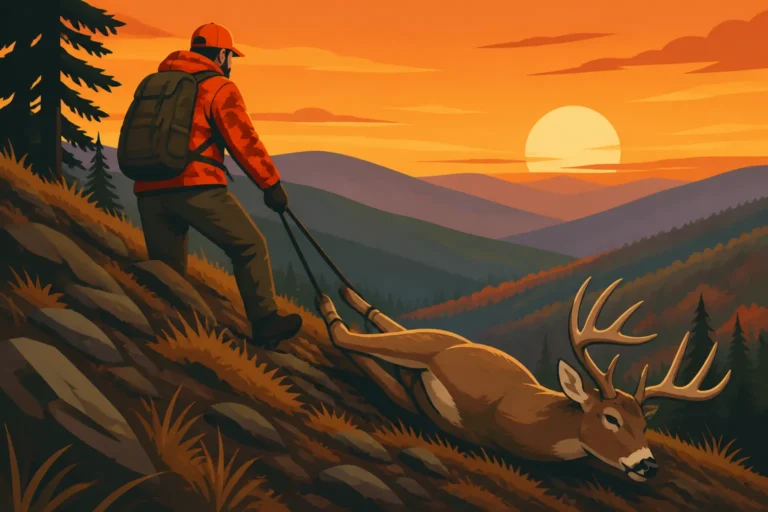
Getting a deer out of the woods, particularly a big New York buck, can be one of the most physically demanding parts of the hunt. Late-season conditions often mean snow, ice, or muddy trails, adding to the challenge. If you're hunting in areas with vehicle access, a deer cart can be a lifesaver. For more remote public lands, especially in places like the Catskills or Adirondacks, you might be looking at a significant drag. This is where a deer sled comes in handy if there's sufficient snow, allowing you to slide the deer out with less friction.
Consider boning out your deer if the terrain is particularly rugged or the distance is extreme. This significantly reduces weight and makes the pack-out manageable, especially if you're alone or hunting in steep ravines. Planning your extraction route before you head in is always a good idea. Knowing Dragging a Deer Off a Catskill Ridge might just save your back.
Reporting Your Muzzleloader Kill
New York State law requires all successful deer and bear harvests to be reported. This is a crucial step in wildlife management, providing the DEC with vital data on herd health, population trends, and hunter success rates. Reporting your harvest is straightforward and can be done online through the DEC's HuntFishNY system or via the HuntFishNY mobile app. You'll need your license information and details about the harvest, such as the date, time, sex of the deer, WMU, and weapon used (muzzleloader in this case).
The reporting deadline is typically within 7 days of the kill, so don't put it off. Prompt reporting helps the DEC manage the deer herd effectively, which ultimately benefits all hunters. It’s also a good practice to record your harvest details for your own records. Utilizing modern tools like the GoHunt app can also help you quickly identify the WMU you're in for reporting purposes. Make sure to complete this final, essential step of your hunt. Details on how to fulfill this legal obligation can be found in Reporting a New York Deer Harvest Online.
Disclaimer
Please note: Hunting regulations and seasons are subject to change. Always consult the most current New York State Department of Environmental Conservation (DEC) hunting and trapping regulations guide before heading afield. This guide is for informational purposes only and should not be considered a substitute for official DEC regulations.